The Conservative controlled Kent County Council has voted to ask the Labour government to cancel the county elections set to be held in May.
The decision was taken by the cabinet of the County Council on Thursday afternoon.
Kent Conservatives have also applied for a “fast track” path which would mean the abolition of Tunbridge Wells and Tonbridge & Malling Borough Councils.
The Conservatives argue that faster cooperation with Labour’s scheme will unlock desperately needed cash for the county more quickly.
The Conservatives say voting for a new County Council this May would be a waste of resources (given that it will be abolished under the Labour plans) as well as leading to delays while new people get into post.
But there were demonstators outside County Hall on Thursday (shown below) who called the Kent Conservatives’ decision the “death of democracy.”
Some opposition politicians believe the biggest overhaul of local government for 50 years is being rushed.
Cancelling the May elections would also mean the Conservative reign at County Hall could be extended from 4 years to 6 years – the party had been expected to lose control of the county at the vote.
The final decision on cancelling the elections will rest with the Labour government.
The Labour scheme involves an elected mayor for Kent. The existing 12 lower tier Borough councils, Medway unitary council and KCC would be all probably be replaced by just 3 “unitary” councils covering much larger areas than the existing Borough Councils.
Southborough Town Council and parish councils like Bidborough would not be affected, although it is possible that new town councils for Tonbridge and Tunbridge Wells (probably with very few powers) will be set up.
Sevenoaks, Tonbridge & Malling, Maidstone and Tunbridge Wells Borough Councils are likely to be merged into one authority. That would meet the government’s threshold for having a population of at least 500,000 for a unitary authority. The four boroughs add up to 557,000 people on the 2023 population estimates.
(Sevenoaks, Tonbridge & Malling and Tunbridge Wells only add up to 373,000 people, so would be too small for one of the new local authorities, making the inclusion of Maidstone a near certainty. Even assuming a 4% population rise by 2027 would still only take the population covered without Maidstone to 388,000.)
Many opposition parties, smaller parties and independents fear that the planned bigger authorities will make voters feel alienated from decision makers based many miles away and work to the benefit of national parties.
Merging Dartford, Gravesham, Medway and Swale into a “North Kent” authority would serve a 672,000 population. And merging Ashford, Canterbury, Thanet, Dover and Folkestone & Hythe into “East Kent” would serve a 668,000 population. The total population of the Kent geographical county is around 1.9 million.
Currently the “upper tier” Kent county authority looks after social care, education and transport. The Borough Councils look after planning and bin collections.
Labour say a “unitary” structure will cut costs and make things simpler for voters to understand. But some politicians fear Labour’s move is designed to make the government’s new house building schemes go faster with fewer planning delays.
West Kent’s local FM community radio station has now been broadcasting for three years and is constantly refreshing its sound to draw in new listeners.
The West Kent Radio studios are now in London Road in Southborough (See below).
The station’s programming aims to reflect a wide range of people, events and issues in the Tonbridge and Tunbridge Wells area, mixing the speech content with music mainly from the 1970s to today.
West Kent Radio is a community station which has been given three FM frequencies by the media regulator OFCOM. It relies mainly on grant funding, sponsorship, some adverts and volunteer effort to generate programming.
Presenter Alex Tuckwell says she brings the enthusiasm from her lifelong passion for radio to her new show at breakfast time on Saturdays.
Alex Tuckwell (pictured below) said: “I always loved radio as a kid. It was the first place that you heard new songs. I have quite a few brothers and sisters, so there was always different music coming from different bedrooms in my house. It’s given me a love in particular of nineties music.”
Alex says she was often listening to Zoe Ball, Sara Cox and Chris Moyles on Radio 1, but has always been a fan of local stations too.
She says: “With local radio you know what is going on locally, what events are happening. You are building a relationship with the radio presenters. You feel like you know them.”
Alex always wanted to work in radio and studied for a degree in Broadcast Media. Alex says: “As a kid, when we first got a computer in the house, I would pretend I was doing my own radio station and record it on the computer. Radio has been a part of my life and a passion of mine for a very long time.”
Alex is on air every Saturday from 8am to 10am on FM 95.5 (from Tonbridge High Street), 106.7 (from central Tunbridge Wells) and 107.2 (from Bidborough Village Hall). The station is also available online and on its own app.
Later on Saturday, former BBC Radio Solent presenter Simon Jupp has begun a new “Decades” programme, mixing music from the 1960s to the 1990s with local newspaper headlines from the time. That runs from Noon until the sports programme starts at 2pm.
On Friday drivetime (4-7pm), the author of the Southborough News blog, former BBC World Service presenter Martin Webber, (pictured below) is on air previewing all the varied weekend events going on in the area.
The aim is to get people “out and about” with event organisers sending him voice memos so they can explain for themselves what’s on offer.
West Kent Radio now broadcasts its daily Local News Feature at 7.30 and 8.30am, which is repeated at 12.30, 2.30, 4.30 and 6.30pm.
Other recent changes on the station include:
Saturday Action – the sports show (2-6pm) now includes reports from local soccer and rugby matches
West Kent Unsigned (Tuesdays 8-10pm) – is now presented by Phil Mills, who plays new tracks from local musicians
Golden Greats (Sundays 2-4pm) – sees Vince Cox reviving some of the great music from the 1960s to the 1990s.
West Kent Radio is grateful for the renewed sponsorship of the Southborough Lions for the “Pure” shows from 7-8pm every weekday. Monday is Pure 60s, Tuesday Pure 70s, Wednesday is Pure 80s, Thursday is Pure 90s and Friday is Pure 00s.
Repairs to the clock of St Peter’s Church in Southborough mean it is partially back in action after falling silent for many months.
The clock that looks out over the famous cricket pitch has again been striking every hour since it was repaired on Thursday.
St Peter’s is the oldest church in Southborough and was designed by Decimus Burton.
The church still lacks the funds to restore the quarter and half hour chimes and donations are still gratefully received.
An appeal has raised only £ 2,000 of the £ 5,000 needed to complete the clock repairs and improvements. 54 people have contributed, according to the Just Giving website.
One plan is to purchase new equipment so that the bells can be silenced overnight.
Many residents have expressed their disappointment about the recent removal of the dedicated recycling areas for bottles and cans in the Tonbridge Sainsbury’s car park, while a spokesperson for the UK Glass industry has also expressed regret.
The decision was taken by Tonbridge and Malling Borough Council, which says it hopes to save £100,000 a year by not having to empty the car park recycling bins.
The glass industry says bottle banks generate high quality glass, ideal for ensuring all glass gets reused for new bottles.
Shortly after the removal of the bottle banks, one frustrated West Kent resident told this reporter: “I have just come to drop off some glass and all the bins have gone. The bins were always there and useful.”
The resident said: “I think the situation is being very poorly handled. I want to recycle the glass. I know of no other place to go – other than taking it to the tip, but that involves registering and making appointments. Just for glass – that’s pointless.”
Bottle banks remain in areas controlled by Sevenoaks District Council such as Edenbridge, Underriver and Chiddingstone.
Matthew Kay is the packaging policy lead for British Glass, which represents glass manufacturers and reprocessors. Mr Kay said: “It is a shame when “bring sites” – as they are known – are removed because they do bring in a high quality of glass recyclate”.
Matthew Kay continued: “Through various pieces of legislation that are going through from the old government, local authorities will be required to collect glass from the kerbside, so we can understand cost implications from the local authorities point of view. However, if there are (bring) sites that are very well used, it is a shame if they can’t be maintained.”
In both Tunbridge Wells and Tonbridge, the councils emphasise that glass bottles can be placed in the mixed recycling wheelie bins collected from homes every fortnight. On the other hand, not all residents are happy with broken glass in mixed recycling bins full of plastic and foil.
Matthew Kay from the Glass industry says if glass is collected from the home it should ideally be separated from other types of recyclable materials as happens throughout Wales, where the government incentivises local authorities to improve separate recycling.
Mr Kay says: “It is absolutely amazing what has been happening in Wales. We do advocate for kerbside collection where ideally glass is collected separately from other materials.”
Cllr Dennis King from Tonbridge and Malling Borough Council said the “relatively large cost” to council tax payers of maintaining the recycling units at Sainsbury’s and other sites couldn’t be justified when glass collections were already taking place from residents’ driveways.
The council also doesn’t like the ability of some local businesses to dispose of glass at the sites, as then the local firms would pay smaller waste collection fees to the council.
More than 20% of glass collected by the Tonbridge and Malling council in the kerbside mixed recycling is currently not in a state that it can be separated out from other waste. So that glass is used in concrete blocks and lost to the glass industry.
That’s a problem as making new glass from raw materials (rather than reusing old glass) is much more energy intensive and releases carbon into the atmosphere.
The ideal is a fully closed loop whereby 100% of used glass is constantly recycled as new bottles. The new arrangements in Tonbridge seem unlikely to help with progress towards that goal.
(You can hear my full report on this story by going to the West Kent Radio website. Thanks to Julia Neal for her help in compiling this story.)
The new MP for Tunbridge Wells is the Liberal Democrat, Mike Martin, who told journalists that an “earthquake” has hit politics after he comfortably defeated the Conservatives by around 10,000 votes.
The constituency of Tunbridge Wells has been Conservative since it was created in 1974, having been combined with Tonbridge before that.
Tunbridge Wells becomes the Liberal Democrat’s first ever seat in Kent.
Mr Martin (above) said: “We are standing in the aftermath of a political earthquake. Tunbridge Wells has had a Conservative member of parliament for 114 years – but no more.
“This earthquake, epicentre Tunbridge Wells, reverberates across the country.”
Neil Mahapatra came second for the Conservatives. He had only been selected to run in the seat a month before the election, due to the sudden decision of Greg Clark to step down.
This is the full result from Tunbridge Wells for July 2024 (compared with 2019 result)
Votes
Share
Change share
Mike Martin
LibDem
23,661
43.6
15.3
Neil Mahapatra
Con
14,974
27.6
-27.5
John Gager
Reform
6,484
12.0
11.9
Hugo Giles Pound
Labour
6,178
11.4
-3.4
John Hurst
Green
2,344
4.3
4.3
Hassan Kassem
Indep
609
1.1
0.3
This is how the vote in Tunbridge Wells was announced.
Meanwhile, In Tonbridge, the Conservative Tom Tugendhat saw his vote share drop from 65% to 41%, but he still retained a majority of more than 10,000.
Tom Tugendhat told journalists at the count: “I’m very pleased to be able to work with the people of Tonbridge for the coming parliamentary term, and I am really privileged to be doing that. So I am very very grateful for the trust placed in me”.
Tom Tugendhat refused to comment on a possible bid for the leadership of the Conservative Party but continued: “This has been a very very difficult night for the Conservative Party. This has clearly been one of those moments where we really do need to stop and rethink where we are going”.
Tom Tugendhat concluded: “This is a moment where we have failed to deliver. And sadly, we have quite obviously we’ve lost the trust and confidence of the British public and that is a really big wake up moment.”
There is more reaction from the Lib Dems and Greens in Tonbridge on the West Kent Radio page:
This is the full result from Tonbridge in July 2024 (compared with 2019):
Votes
Share
Change share
Tom Tugendhat
Con
20,517
40.8
-24.0
Lewis Bailey
Labour
9,351
18.6
3.5
Anna Cope
Green
7,596
15.1
7.2
Teresa Hansford
Reform
7,548
15.0
15.0
John Woollcombe
LibDem
4,234
8.4
-3.9
Tim Shaw
IndAK
926
1.8
1.8
Ian Grattidge
SDP
156
0.3
0.3
Here are the full remarks of the new Lib Dem MP for Tunbridge Wells, Mike Martin, following the count:
“ We are standing in the aftermath of a political earthquake. Tunbridge Wells has had a Conservative Member of Parliament for 114 years, but no more. And this earthquake – epicentre Tunbridge Wells – reverberates across the country. We look at the results: the Conservative Party have returned their worst result possibly ever. And the Liberal Party have returned their best result in over 100 years. The people of Tunbridge Wells can help us understand what has happened. For the last two years I have been talking to you on your doorstep and you’ve told me that you want honest, moderate, pragmatic government.You’ve told me you want politicians who solve problems and who serve their country rather than themselves. There’s a lot for me to live up to in that long list of desires but I pledge to you now that I will do what is right for the country and what is right for you, the people of Tunbridge Wells. I want to finish by saying we have a difficult decade in front of us. And we have had difficult decades before and we have come out better for them, and we will do so again.”
The parliamentary seat of Tonbridge is seeing a hard fought battle for votes, in sharp contrast to the last General Election five years ago when the Conservatives dominated and took a 64% share of votes.
A poll this week from Electoral Calculus suggests that the Conservative vote share in Tonbridge could fall to just 32%. Both the Green Party and Reform UK campaigns are benefiting from having well-known candidates who live and work in the area.
An election leaflet delivered today from the Conservative Tom Tugendhat, who was the MP until the election was called, concluded: “Thursday’s election will be very close and nobody knows what will happen.”
In an interview for West Kent Radio and Southborough News, the Green Party candidate, Anna Cope, told me the Greens were now the opposition to the Conservatives in the constituency, based on local voting patterns.
Anna Cope (pictured below) said: “There has been a real momentum towards the Green Party in recent years. In 2019, there were no Green councillors and we now actually have 11 – stretching from Tonbridge itself all the way up to New Ash Green, which is a real heartland for the Greens.”
Anna Cope says she has a real feeling for what local people want, as she lives locally, has been elected to the Borough Council twice and teaches at a local school.
Anna Cope argues that the Green Party’s policies are “working towards a fairer, greener planet.” Their plans include nationalisation of the water industry, more cycle lanes, a rejection of Gatwick expansion and a reversal of benefit cuts.
The Green manifesto envisages an extra £250bn a year of public spending – that’s a 20% increase on current levels – with £80bn a year of extra borrowing. But Anna Cope denies that the plans are too radical for many voters, insisting instead that the Greens are the only party being honest with voters about the sums required to improve public services and the environment.
Her full interview is available to watch here:
Meanwhile, the Conservative candidate Tom Tugendhat argues that his recent local campaigns have successfully delivered for Tonbridge residents.
Those campaigns include restoring a Post Office in Tonbridge High Street, a new Edenbridge medical centre, better flood protection and persuading Sainsbury to invest £20 million reopening the space occupied formerly by the Tonbridge Beales shop.
Tom Tugendhat (pictured below) told me: “As a former soldier, I know how important it is to deliver. And having had the privilege to serve this community for nine years, there are a huge number of things that we’ve achieved together. There’s a lot more to do.”
On national issues Tom Tugendhat says the Conservative manifesto plan for £17bn of tax cuts is justified by recent economic growth, despite the UK government’s huge £ 2.7 trillion national debt.
He argues that Labour’s plan to tax private school fees and impose business rates on private schools is “bad for everybody in the educational system”, because he says it will make fees unaffordable for some parents and so add to pressure on state school places. He concludes: “It is not going to save any money, it is going to cost money (for the government).”
On climate change, Tom Tugendhat says the government has already invested hugely in wind and solar power. And he argues that nuclear power – which is rejected by the Green Party and was delayed by the Lib Dems – is vital for cutting carbon emissions. He also wants to stop Gatwick’s new runway plans.
Tom Tugendhat says: “A vote for anybody else except me is going to effectively used as an endorsement for Labour, because it will just increase the majority they are trying to achieve.” Watch Tom Tugendhat’s 20 minute interview here:
The Reform UK candidate, Teresa Hansford, told West Kent Radio reporter Julia Neal about her local credentials. Teresa Hansford has had a business in Tonbridge for the last 12 years and has lived in the town for 22 years.
The Reform UK candidate said: “I am absolutely passionate about Tonbridge. I have always been active in the local community. I love the area and I love the people and I just basically love England.”
Teresa Hansford argues that personal taxes should be cut and she believes Brexit hasn’t been properly implemented. She also wants no more people coming into the UK than leaving it for a period, arguing: “immigration is basically good, but we have got to get a hold on it.”
On local issues she says social housing should be run by companies that are more local, while she says local public transport is too disjointed and expensive and there aren’t enough cycle lanes. More from Teresa Hansford here:
The Liberal Democrat candidate in Tonbridge is John Woollcombe. He is a qualified barrister who says he would bring skills of rigour and competence to being the town’s MP.
John Woollcombe warns that both the Conservatives and Labour have what he called “extreme” elements in their wings.
He pointed to the “disastrous right wing” Liz Truss mini-budget and argued that “we could see the same with Labour because Kier Starmer is speaking a very different language from the language he spoke when he was trying to appease Jeremy Corbyn’s supporters. At any point we could be threatened by those elements.”
John Woollcombe (pictured below) says the Lib Dem manifesto: “is about providing the public services that people need and the care and social care – and improving the standard of living.” He says the Lib Dems would hire more GPs and make conditions better for those doctors already working in the NHS.
John Woollcombe says he is concerned by increased noise from Gatwick expansion, but doesn’t rule out supporting a new runway. He told us: “It is not about opposing it. It is about the timing of it and about exactly how it is going to be implemented and whether there are any benefits for local communities.”
John Woollcombe told us the Lib Dems wanted to “rebuild our relationship with Europe, align professional standards and rejoin the Erasmus scheme (for students in the EU).”
He says the immigration issue has been put forward as a “distraction” from the ageing population that is putting increased pressure on the health system. To understand more about John Woollcombe’s views watch here:
West Kent Radio next spoke to the SDP candidate, Ian Grattidge, who told us he was a career accountant – mainly in the civil service – and has also worked in the charity sector. The SDP promises to nationalise the railways and utility companies. The party also wants to abandon Carbon emission reduction targets. Ian Grattidge was neutral on Gatwick expansion plans.
Also standing in Tonbridge is the Labour candidate, Lewis Bailey, and the representative of the Independent Alliance (Kent), Tim Shaw. Neither Labour or the Independent Alliance (Kent) accepted opportunities to be interviewed for West Kent Radio.
The West Kent Radio website has a special Election page allowing you to listen to in depth interviews with most of the candidates:
The radio page includes a recording of students from the Judd School with 5 minutes of their thoughts on the main election issues.
For lovers of podcasts, you can also listen to candidates in the Tonbridge and Tunbridge Wells constituencies by listening to the latest episode of the podcast, WEST KENT TALKING, which is available on Apple podcasts and other podcast apps.
The three main political parties in Tunbridge Wells all say they have a good chance of winning the seat, despite the fact that the constituency has been held by the Conservatives since it was formed in 1974.
The Liberal Democrats have focused sizable resources on Tunbridge Wells as a key target seat, having just won overall control of the Borough Council.
The party selected Mike Martin (pictured below) as their new candidate nearly two years ago and he says he spoke to 5,600 local residents before the campaign even started.
Mike Martin says his skills are “leadership” and “bringing organisations and communities together”. He is a former army officer, led a charity and has written various books.
But in recent weeks he has been criticised by his opponents for failing to appear with the other candidates to answer public questioning at local hustings events.
Mike Martin missed the Soroptimists women’s group hustings event (attended by 100 voters), the hospitality hustings (60 attending) and also decided to leave the other five parliamentary candidates to attend the Tunbridge Wells Church Hustings (see below).
A Lib Dem spokesman said: “Because this was an unexpected “snap” election, with very little time until polling day, Mike Martin and his team had had to make careful choices about how to prioritise his time, including holding as many one to one discussions as possible with local residents on their doorsteps.”
The spokesmen pointed to Mike’s appearance instead on a BBC Radio Kent half-hour programme on June 21st where candidates answered questions chosen by the BBC from those submitted by the public.
Mike also agreed to a 20 minute interview with me for the community station West Kent Radio, which is available here to watch on YouTube.
Speaking in that interview, Mike Martin said he wanted to get the town centre “sorted out”, with new housing paired with infrastructure. The Lib Dems are pledging 8,000 more GPs and want a guarantee that for urgent cases a GP appointment will happen within 24 hours.
On the rapidly rising UK population, Mike Martin said: “We don’t have targets on immigration. We are focused on training and paying our workforce properly, which naturally will bring down the levels of people that come into the country”.
On climate emissions, Mike Martin proposes insulating more homes and halting new North Sea oil and gas projects. He opposes Gatwick’s planned expansion – but he also surprisingly wants to cut the cost of flying for most people.
The Lib Dems say that “frequent flyers” (who take more than two return flights a year) will be punished with extra taxes, but Air Passenger Duty should be abolished for people taking one or two return flights a year, arguing “the average family takes two return flights a year …people who work very hard should be able to take holidays”.
He opposes Labour’s tax on private school fees and there would be no new housing on the Green Belt.
The Labour candidate is Hugo Pound (above), who has lived in the town for 32 years. He says he has good listening skills, being a psychologist by training.
Hugo Pound is a former governor of Judd School and Skinners Kent Academy. He has been a Borough Councillor for 5 years and has been the councillor in charge of planning for the past two years.
He dismisses the Liberal Democrats claim to be the main challenger to the Conservatives, pointing out that Labour came second to the Conservatives in both the 2015 and 2017 General Elections.
Hugo Pound says: “Small parties like the Lib Dems do well in local elections – and they typically don’t do well in General Elections. Here in Tunbridge Wells, the polls are suggesting that all three of the main parties are very close together.”
On the NHS, Hugo Pound says that Labour will be pragmatic, using the private sector to reduce the waiting lists in hospitals and moving more people out of hospitals into social care.
He admits that Labour’s new taxes on private school education have been “contentious” for some voters. Labour has promised that private schools will start paying business rates, while a 20% VAT tax will also be added to school fees.
Hugo Pound points out 93% of children attend state schools and he says that the state system needs extra funding and “that money has to come from somewhere”. He says if children are benefiting from “special needs” provision at a private school then the fees will not be liable to the VAT tax.
He said if any staff at private schools lose their jobs then “they will come into the state system – if they are dedicated to teaching, they will teach within the state system.” Hugo Pound’s full answers are here:
On climate emissions, Labour would – like the Lib Dems – halt new developments of North Sea oil and gas projects.
Hugo Pound rejects Gatwick expansion and also rejects the Lib Dem proposal to cut the taxes on air tickets paid by most people. He said the Lib Dem policy: “doesn’t make any sense…we need to reduce the amount of air traffic that we see in our skies…it is filthy.”
On planning, Hugo Pound says the widely reported idea that Labour will impose more house building on green fields is wrong. Instead he says: “there will be more consultation, more recognition of Neighbourhood Development Plans, more respect for the consultation process with residents.”
The Conservative Party had to act fast to choose a new candidate after Greg Clark (above) announced on 24th May that he had decided not to run again after 19 years as the town’s MP.
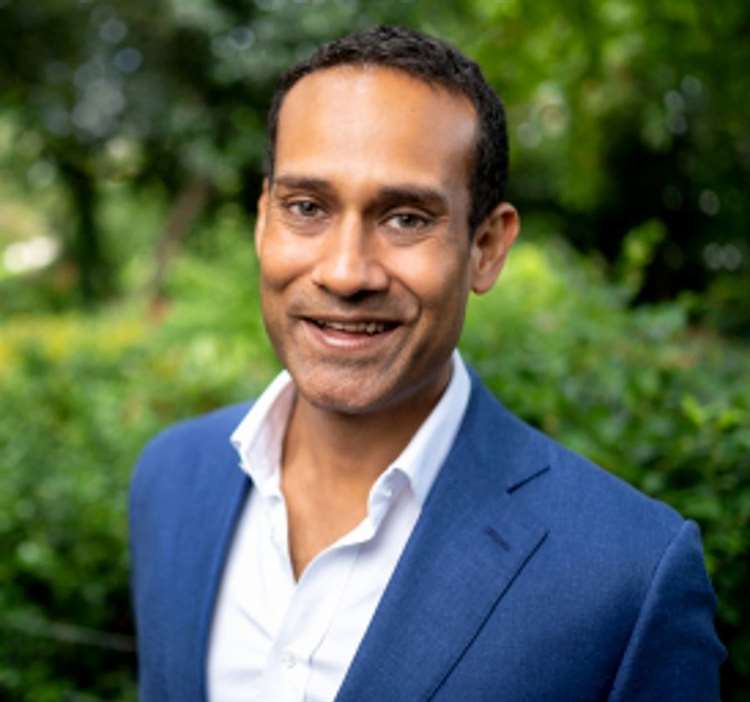
The Conservatives chose Neil Mahapatra (below) who believes his business experience would benefit investment in the town.
Mr Mahapatra has set up companies in fast-growing markets from electric vehicle charging to rural internet and medicinal cannabis.
He says he “loves” the constituency having been brought up near Maidstone and enjoyed watching Kent county cricket at Tunbridge Wells. His mother was a doctor at Pembury Hospital.
Despite the UK already having amassed £2.7 trillion of debt, the Conservative manifesto promises £17bn of new tax cuts. Neil Mahapatra says the economy is now growing and that does leave room for tax cuts.
He thinks the NHS needs to improve efficiency by reducing tiers of management, rather than necessarily have even more funding. Spending on the NHS was increased from £150bn in 2010 to around £180bn a year currently. Neil Mahapatra’s full answers are here:
Neil Mahapatra explained that he believes that the Conservatives have “made huge strides” in improving standards of state education since they took power in 2010. He said the proportion of schools ranked good or outstanding has been lifted from 68% to 88%.
He opposes Labour’s new taxes on private schools, which he says will impose more stress on state schools as some parents pull their children out of the private education due to the increased fees.
Neil Mahapatra says he voted to remain in the EU but he now opposes the Liberal Democrats idea of working towards rejoining the EU single market with free movement of workers between the UK and EU.
He opposes Gatwick expansion plans but defends the continued exploitation of fossil fuels from the North Sea on the grounds that it makes us less dependent on fuel from Russia and the Middle East.
Neil Mahapatra says Labour are likely to win nationally, but says Tunbridge Wells needs him to be elected as a strong MP who is able to oppose Labour’s tax plans and push back against the ideas of the Liberal Democrat run Tunbridge Wells Borough council.
The Reform UK candidate in Tunbridge Wells is John Gager (above). He is an IT specialist who has lived in the constituency for 12 years. He says legal and illegal immigration is “out of control” and he wants net immigration to be cut to zero.
John Gager highlights the other key Reform UK policies of personal tax cuts worth £59bn, “making work pay”, promoting small business and clearing NHS waiting lists within two years.
He also wants to end Net Zero climate targets (with more UK oil and gas production), to “remove destructive gender and woke ideologies from schools” and provide young people with help with student debts.
The Green Party candidate in Tunbridge Wells is John Hurst (pictured above). He promises voters that his party’s programme would create “a greener, fairer country”.
In the party’s latest internet posting, John Hurst says: “We live in one of the richest countries on the planet, and yet nurses are using food banks, our children’s schools are crumbling, a roof over our heads is all too often unaffordable, and a hospital appointment or a dentist is like gold dust. Our promise to you is that all this can change”.
The Green Party programme involves a huge rise in public spending and an extra £ 170bn a year in personal taxation, hitting earners over £50,000pa and taxing more pension contributions.
The sixth Tunbridge Wells parliamentary candidate is an independent, Hassan Kassem (above). He says he is interested in social justice. He promises “a vision of hope and a platform for change.”
Hassan Kassem’s website declares: “Over the last three years, I worked at a national charity, promoting a new kind of policymaking that centred on public participation. I will set up local citizens’ assemblies and forums to hear your concerns and ideas and involve you in creating the change we want to see”.
Hassan Kassem proposes a “Green New Deal” with nationalisation of energy, water, rail and mail. He wants more support for local entrepreners and British farmers, saying he is shocked that just 17% of fruit and 55% of vegetables consumed in the UK are grown here.
Another way of learning more about the candidates is to listen to the latest edition of the podcast WEST KENT TALKING, which is available on Apple podcasts and other podcast platforms. You can hear interviews with most of the candidates in Tonbridge and Tunbridge Wells.
Residents in central Tunbridge Wells say they are “fed up” and “frustrated” by the failure of local councillors to sort out the problems they face due to the town centre’s traffic restrictions.
Local people looking for parking in the streets they live in must do a mile long diversionary loop involving 3 sets of traffic lights just to return to their road to hunt for suitable spaces a second time.
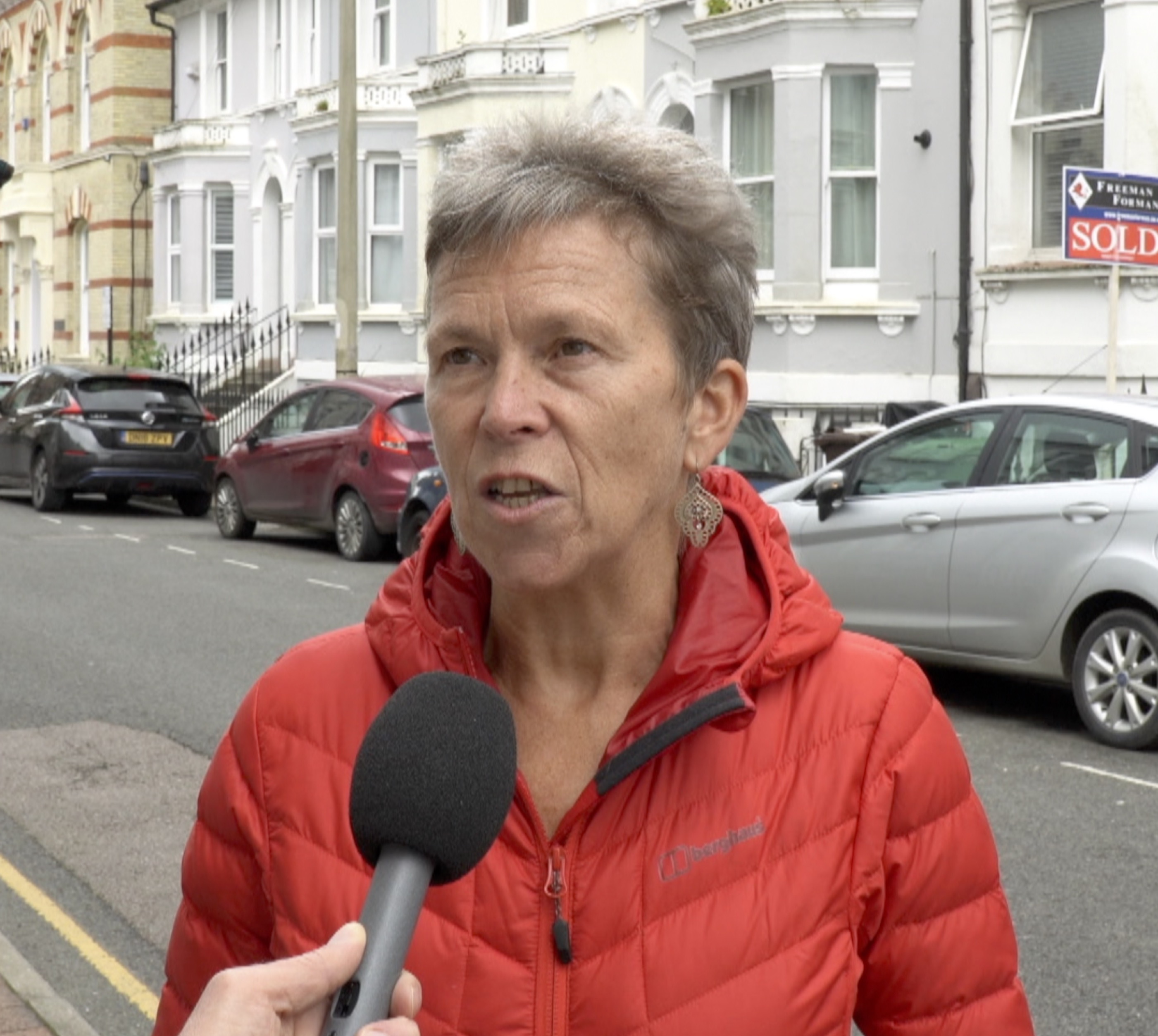
One resident of Dudley Road, Sally Atkinson, (pictured below) told West Kent Radio and Southborough News YouTube that: “We have been talking about this now for 15 months and absolutely nothing other than sitting on a lot of hands and a lot of vacuous words have been spoken…and nothing happens.”
She continued: “Meanwhile, the residents of these streets spend an hour of their lives every day doing an unnecessary journey around town…thorough 3 sets of traffic lights and a roundabout in order to procure parking outside their home, for which they have paid for.”
(UPDATED AUGUST 2024):
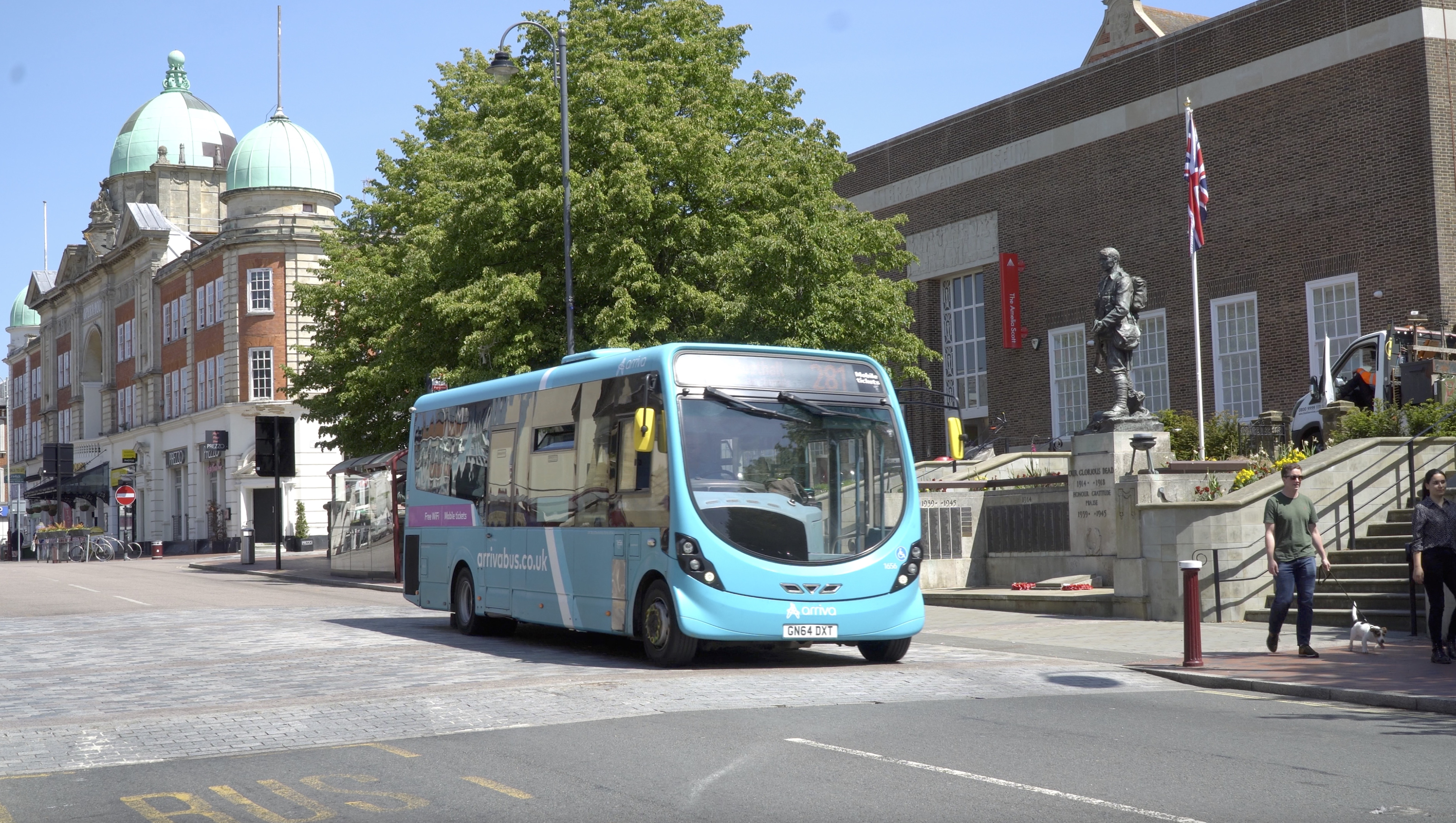
Tunbridge Wells Borough Council has now collected more than £ 2.2 million in fines from motorists who venture into the restricted “bus lane” area on Mount Pleasant outside the war memorial. After council costs, this has given the Borough £ 1,557,789, according to a Freedom of Information request answered on July 11th which covered the period “2023/24”.
The revenue from the fines can only be used for future schemes to promote cycling and walking in the Borough.
The scale of the fines so far is huge, with the number of penalties issued roughly equivalent to the number of drivers in the Borough. 78,622 fines have been issued over 2023/24.
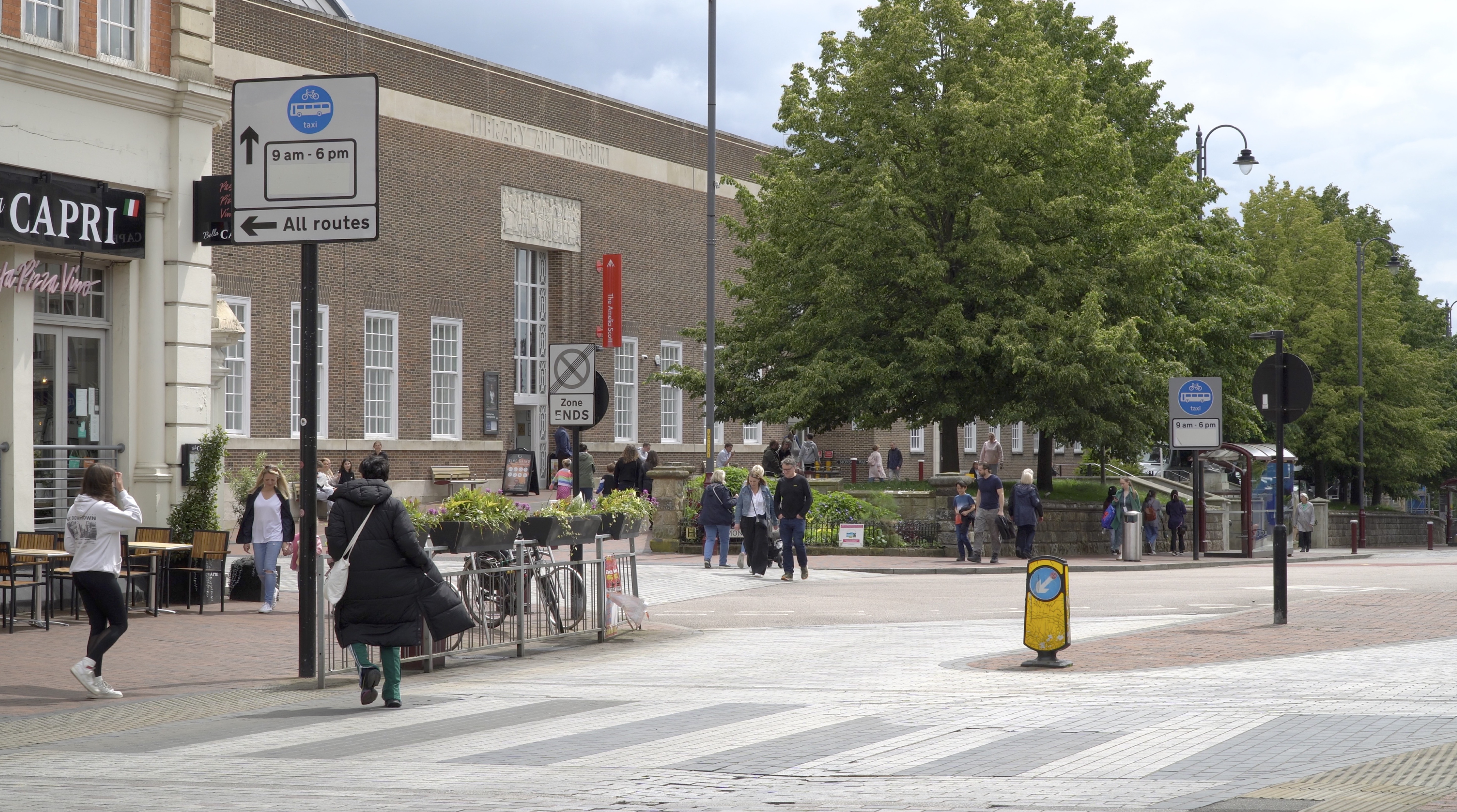
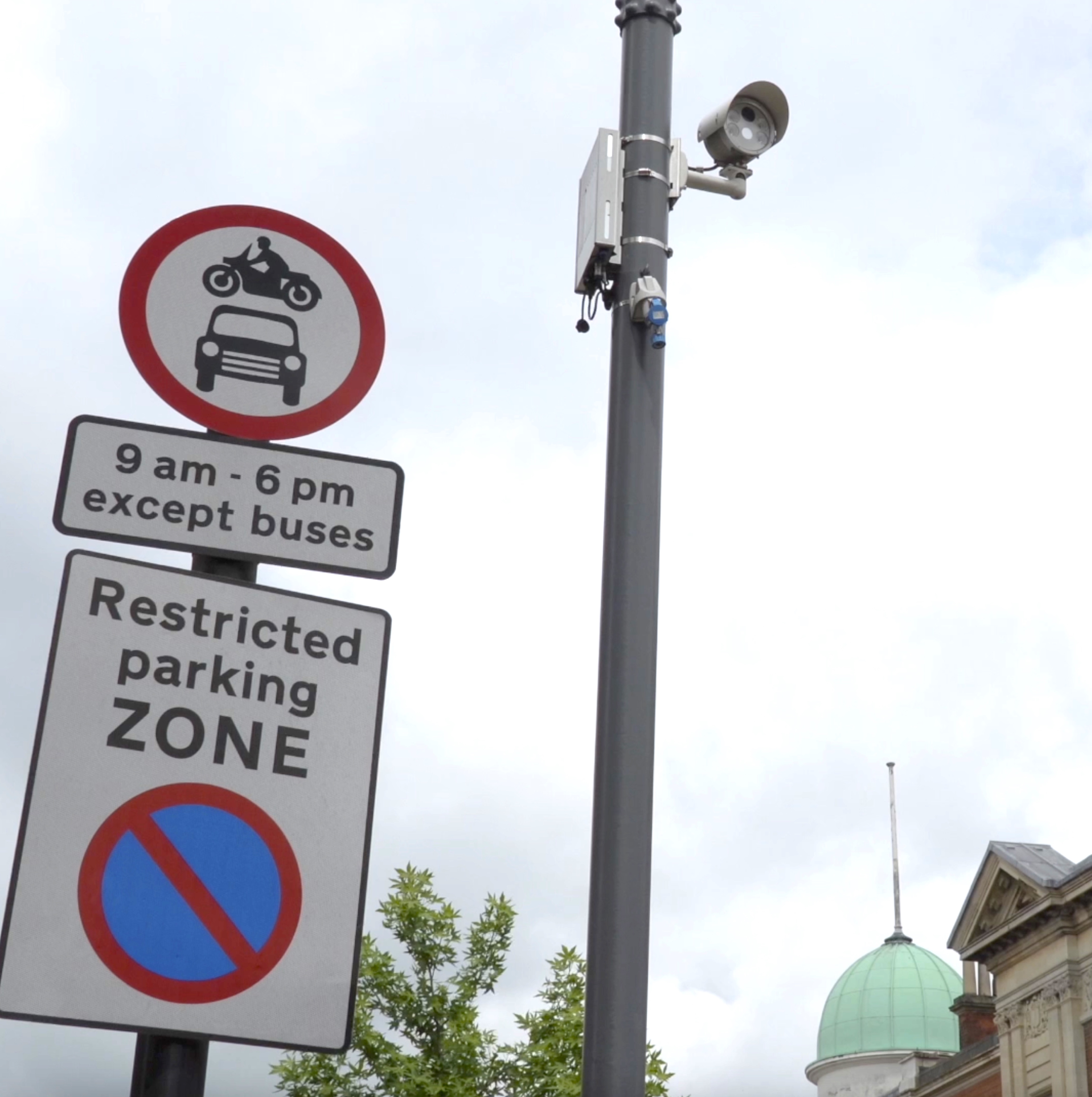
Many motorists appear to be unable to react to signs that are difficult to see amongst the pedestrians and buses they also need to watch out for in the town centre.
Below is one problematic spot where drivers have to deduce that they need to turn left and go over raised paving down a narrow road to avoid a fine. Many go straight on down the wide Mount Pleasant Road only to pass the blue no entry sign 10 yards down the road.
The council says that the scheme has improved air quality and says the number of fines has dropped from 360 per day to less than 100 per day.
After a year of operation, around 60% of the penalty tickets are now sent to confused motorists from outside the Borough.
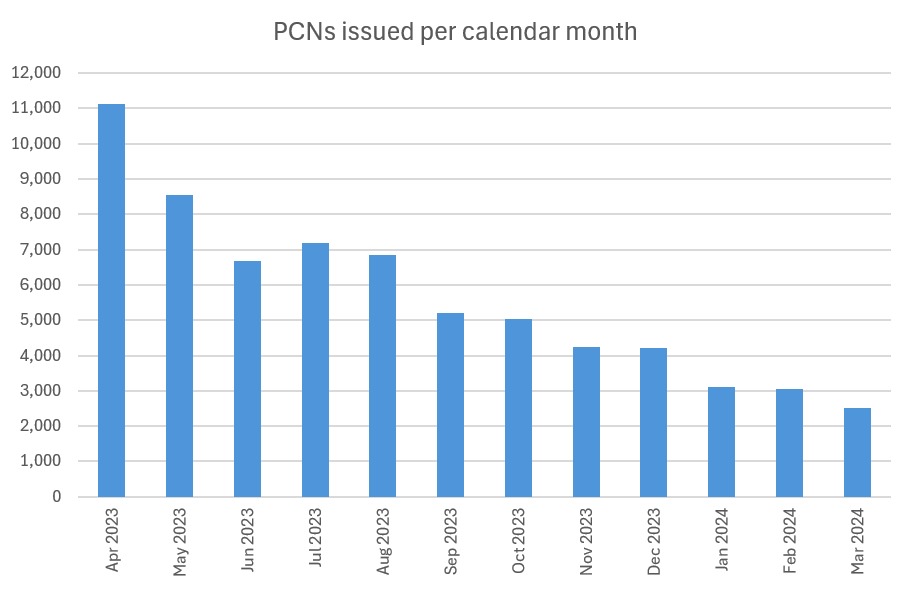
The number of Penalty Charge Notices issued (or PCNs) is shown below decreasing but still at 2,500 a month in March 2024. The council was initially cancelling fines for “first offenders” if they appealed immediately on receiving their PCN, but NOT if the drivers quickly paid the reduced £35 penalty charge and then decided they had been badly treated and tried to appeal.
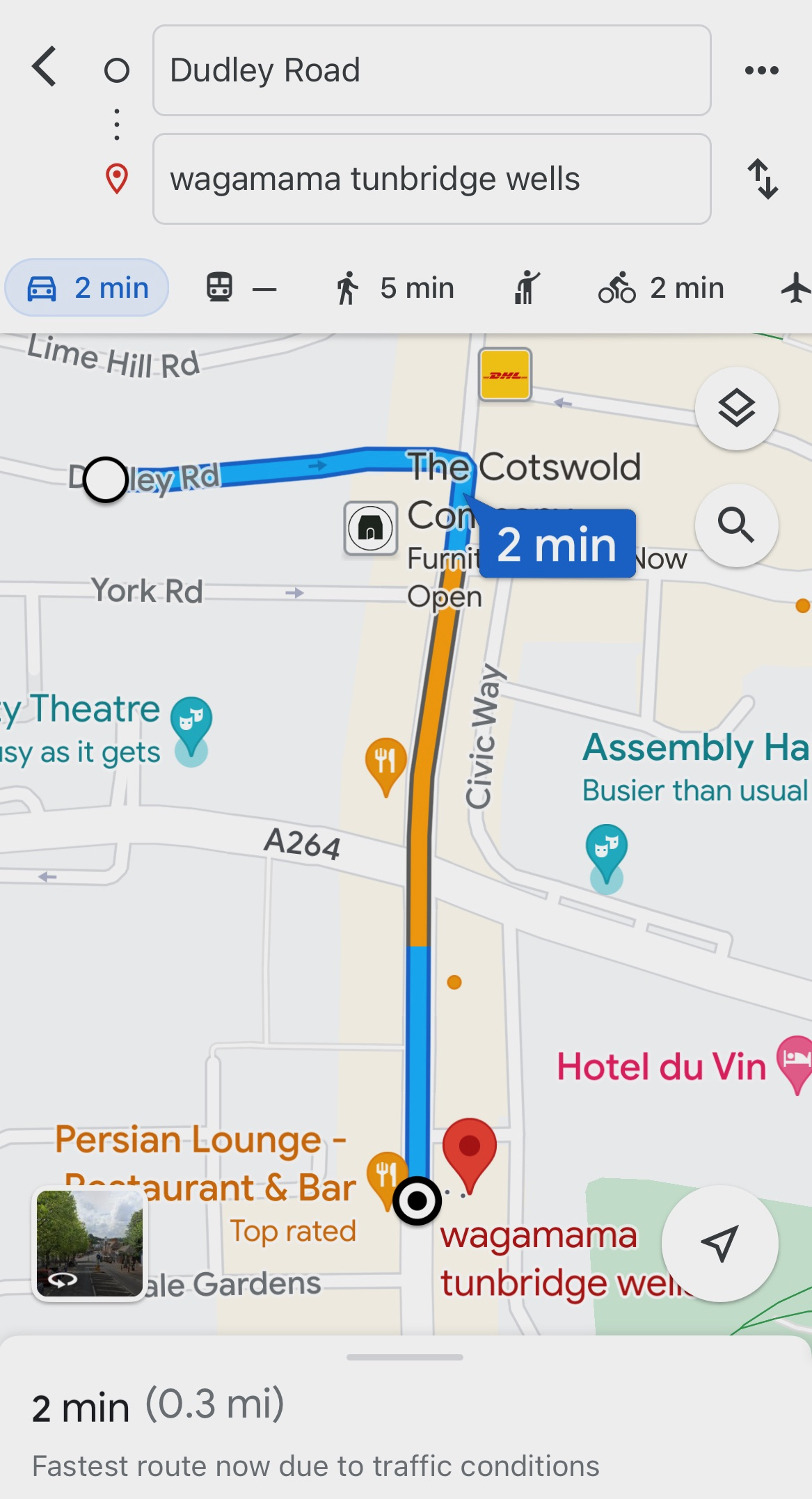
Google maps initially continued to direct motorists down the restricted area:
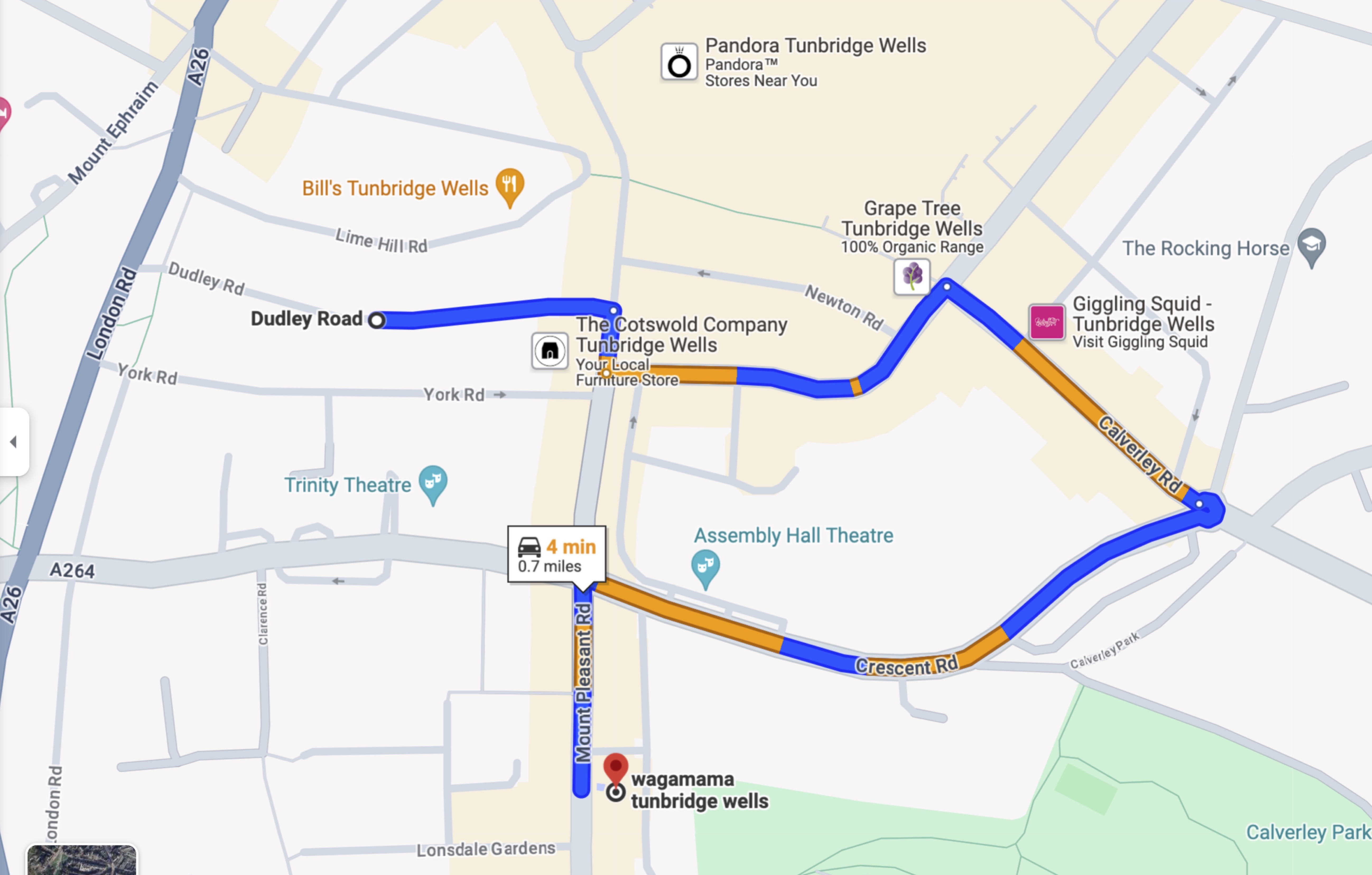
The Google maps app now correctly directs drivers in Dudley Road aiming for the Wagamama in Mount Pleasant Road around the extra 0.4 mile diversion through Monson road, Calverley Road and Crescent Road.
Traffic entering Monson Road travelling east to west has to do a u-turn when it reaches Mount Pleasant during the restricted hours which are 9am to 6pm.
All political parties have been involved in the design of the scheme, officially known as Public Realm 2 or PR2. It was originally planned under the Conservative council, while the fines began to be enforced after the formation of the coalition council grouping, which was led by the Liberal Democrats but also included Labour and Tunbridge Wells Alliance Party. Transport schemes are also overseen by the Conservative-controlled Kent County Council.
Meanwhile, local resident Sally Atkinson says she was not consulted about the design of the scheme before it was implemented.
She said: “It’s been very successful for the Tunbridge Wells Borough Council coffers. It’s been remarkably unsuccessful for any of the residents on the feeder roads, the businesses on Monson Road and for a lot of drivers that inadvertently go through the bus gate without realising they’ve done so.”
You can hear more of how Sally Atkinson says the issues can be solved by viewing her 8 minute interview:
The leader of Tunbridge Wells Borough Council, Ben Chapelard, spoke about the scheme a year ago about one minute 40 seconds into this 4 minute interview.
The local members of the Conservative Party have chosen a banker who once organised the private investment activities of Lord Rothschild as their replacement for Greg Clark as General Election candidate in Tunbridge Wells.
Neil Mahapatra is the son of two doctors and was brought up in the village of Leeds near Maidstone.
Neil Mahapatra (below) is now Managing Partner of Kingsley Capital Partners, an investment firm he established a decade ago, that “conceives of and builds new businesses from the ground up”.
He recently posted to Linkedin that he was “pleased to announce the £26m funding round for Zapgo, an electric vehicle charging business building and operating rapid EV chargers at destination locations across the UK”.
Prior to Kingsley, Neil Mahapatra worked at J. Rothschild Capital Management. He also worked at Morgan Stanley investment banking from 2003 to 2006.
Five years ago he appeared in a podcast discussing the potential of cannabis-based medicinal drugs.
Neil Mahapatra has been active in the Conservative Party for over 20 years, including as a candidate in a previous General Election. He was leading the fundraising for the new Maidstone & Malling Conservative Association and Helen Grant’s re-election campaign.
At university, Neil Mahapatra was President of the Oxford Union debating society. He previously stood for parliament in 2010.
Neil Mahapatra was selected by 100 Conservative Party local members at a meeting in Paddock Wood on Saturday afternoon. A shortlist of 3 candidates had been provided by the central Conservative Party.
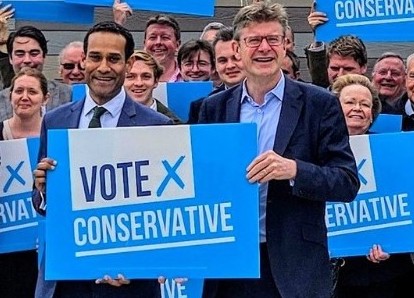
Neil Mahapatra was pictured (above) with Greg Clark on Saturday after his selection. Not selected were the Treasury adviser Simon Finkelstein and former Maidstone Borough Councillor, Louise Brice.
Earlier this week radio presenter Iain Dale declared he was hoping to make it on to the shortlist. But he pulled out of the race after the emergence of comments he made about Tunbridge Wells which suggested he didn’t like the place.
The other known parliamentary candidates for Tunbridge Wells so far are:
Green: John Hurst
Independent: Hassan Kassan
Labour: Hugo Pound Liberal Democrat: Mike Martin Reform UK: John Gager
Local Conservative Party members will choose a new candidate for Tunbridge Wells after Greg Clark announced last week that he would be stepping down after 19 years as the town’s MP.
On Tuesday evening the LBC presenter Iain Dale said he was leaving his show to attempt to be selected to run for the Conservatives. He ran once before for the Tory party in Norfolk and lost.
Then on Friday (31st) morning Iain Dale announced on LBC that he had given up his bid to become one of the 3 candidates to go before local members.
That followed the discovery of comments about Tunbridge Wells that Iain Dale made in one of his own podcasts two years ago that he “never liked the place” and “would happily live somewhere else”. He has lived in the area since 1997.
Speaking live to LBC on Friday morning, Iain Dale explained his past dissatisfaction with life in Tunbridge Wells by saying the main road from Pembury (where he lives) to the town had suffered constant traffic delays due to roadworks. A friend had also been mugged in the town.
Greg Clark’s decision not to compete in the July 4th General Election came as a surprise.
In his departure letter, Greg Clark said that he thought the time was now right to “hand the baton” to someone else, but gave no specific reason for his decision.
His letter continued: “To stand at the election involves a five-year commitment.” That statement was also true, though, in December 2022, when Greg Clark told me in a radio interview that he “absolutely” wanted to stay on and stand for election once again.
The local Conservative Party is now desperately trying to find a suitable alternative candidate before the nomination cut off date of Friday 7th June.
Conservative Central Office will send a list of 3 approved candidates to the local Conservative Association and a secret ballot of all local members at a special meeting will choose who will stand.
The Liberal Democrats were given a boost by the recent local council elections, which saw the party take overall control of Tunbridge Wells Borough.
The Liberal Democrat candidate to be the next Tunbridge Wells MP, Mike Martin (pictured below), said the decision of Greg Clark to step down reflects what we are seeing across the country.
Mike Martin continued: “The people who are most surprised by the election being called seem to be the Tory MPs and it is notable I think that Michael Gove, John Redwood – and now Greg Clark – are standing down in seats where the Liberal Democrats are the challengers to the Conservatives.”
Meanwhile, Labour’s parliamentary candidate Hugo Pound (pictured below) said he understood Greg Clark’s decision, stating: “He clearly is a much more moderate One Nation Tory than many of the others who have been in government – and who would be in government – if they were to win the next election.”
Hugo Pound said he hoped the Conservatives would now not bring in a candidate from outside the area, continuing: “What I would much rather see is another local candidate, like myself, who has lived here – in my case for 30 years..brought my children up here. I think that is a better representation for Tunbridge Wells and what is needed now.”
There is more reaction on my Youtube channel:
The decision of the LBC presenter Iain Dale to throw his hat in the ring comes nine years after he lost as a Conservative General election candidate in the North Norfolk consituency.
Talking live on air on Tuesday 28th May, Iain Dale (pictured below) told his listeners: “You know how much politics means to me. And if you’ve listened for any length of time, you know I’ve always had two ambitions in life. One was to be a radio presenter and the other was to be an MP.
“Last time I tried, the electorate fought back, in quite a major way it has to be said. But now I am putting my hat in the ring again to be a candidate at the General Election.
“Whatever the result, I feel I can play a role in restoring trust and honesty in politics. There are no guarantees I will be selected, let alone elected, but I know that I would forever kick myself if I didn’t at least have a go.
“Even if you don’t share my politics, I hope at least that’s something you can respect.
“Now, under broadcast rules I could technically carry on presenting this show until Friday but I’m going to step aside now. It just feels the right thing to do.
“I want to thank everyone at LBC and Global for their support, friendship and love and for their understanding…
“Most of all, whoever you are, wherever you are in the world, however often you listen, I want to thank you from the bottom of my heart for your loyalty, your calls, your messages and friendship over the last 15 years. This is the best job I have ever had.
“This won’t, I hope, be the last you hear of me on LBC, but for now that’s it. Thank you and goodbye.”
Iain joined LBC in 2010 and has presented four LBC General Election Night Shows, two American Presidential Election shows, the station’s Scottish and Brexit referendum night shows, as well as the station’s evening show.
Broadcast rules mean candidates in the General Election aren’t allowed to present radio shows.






 Southborough News