
A new expert report has said that South East Water was wrong to blame its failures in Tunbridge Wells at the end of last year on a bad batch of chemicals and unusual fresh water supplies.
A detailed report by the government agency, the Drinking Water Inspectorate or DWI, into the collapse of the supply to 60,000 customers says there is no evidence for either theory.
The DWI instead has concluded that South East Water’s failures were “foreseeable and preventable” and the company has now been placed into a so-called “transformation programme”.
The DWI explained: “A transformation programme is one of the most significant steps the Inspectorate can take. It is used when a water company has shown a pattern of serious or repeated failures that cannot be addressed through individual enforcement actions alone.”
The DWI statement issued on Tuesday continued: “Under a transformation programme, the Inspectorate works with the company to identify the root causes of poor performance and formalise these programmes into legal instruments, to deliver the changes needed to ensure consumers receive the reliable water supply they are entitled to expect.”
Local water industry expert, Charles Hedges (pictured below), told Southborough News: “A lack of maintenance, jar testing and recording of pH as well as undersized equipment highlights the lack of investments at Pembury – investments that should have occurred 30 years ago.”

Charles Hedges continued: “In its 2024 report, OFWAT records a series of failures by SE Water that go back to 2018. The DWI report of 2026 provides evidence of continued failures that reflect poorly on the technical leadership within the company.”
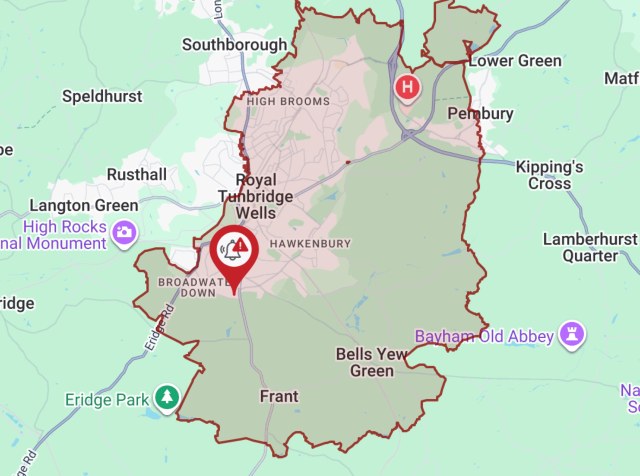
The DWI said the December disruption (mainly affecting the area shown above) originated at Pembury Water Treatment Works, where South East Water did not have sufficiently reliable systems in place to detect and respond to emerging issues in real time.
The DWI report states that: “The site had experienced earlier signs of instability that, if appropriately investigated and acted upon, would have prevented the works failure and subsequent loss of supply and impact on consumers.”
It continues: “Analysis of five years of raw water data demonstrated that raw water conditions prior to and during the event were within normal historic operating ranges. There is no evidence of a sudden change in raw water quality which would explain a sudden treatment failure.”
The DWI states: “Raw water monitoring at Pembury was insufficient for effective process optimisation with no continuous temperature monitoring at the works inlet and pH and alkalinity sampling alone insufficient for short-term or real-time decision making without constant review. Regular jar testing to confirm optimal coagulant dose had not been performed despite this being a requirement under a regulatory notice.”
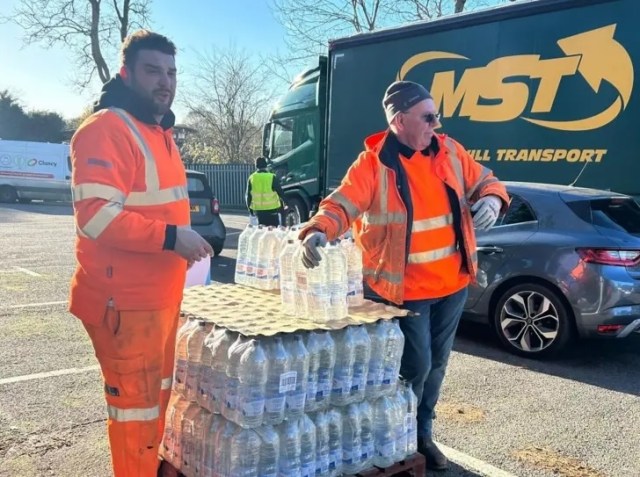
The report continues: “The company pursued a batch chemical (coagulant) batch theory during the early stages of the loss of supply event. The theory has since been disproven with the chemical being confirmed within specification. The focus on a bad batch theory also meant operational resource distracted from identifying the need and attempt to optimise the current coagulant and process. The reactive jar testing which was completed onsite was delayed by a day due to staff availability.”
The DWI concludes that the supply interruption and boil water notice “arose not from exceptional raw water conditions but from longstanding weaknesses in operational management, treatment optimisation, monitoring, maintenance and organisational preparedness at Pembury water treatment works. Taken together, the findings point to systemic and repeated failings across both operational control and emergency management arrangements, resulting in serious consumer impact.”
The full DWI report is found here:
https://www.dwi.gov.uk/drinking-water-inspectorate-south-east-water-tunbridge-wells-investigation-conclusion-november-2025/
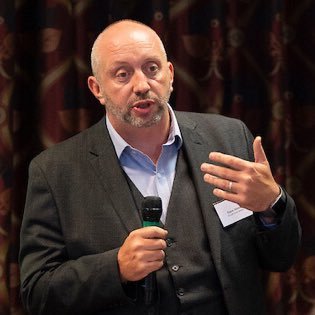
The chief executive of South East Water, Dave Hinton (pictured below), remains in his job despite the scathing report from the regulator.
The Environment Secretary Emma Reynolds said she had already “hauled in the CEO and Chair of South East Water to my office to ask them why we’re seeing repeated failures in leadership and service to customers, and I took the extraordinary step to ask Ofwat to investigate its licence conditions. I have demanded a serious recovery plan and swift action to prevent an incident like this happening again.”
Emma Reynolds continued: “This government has already banned unfair water boss bonuses, and our once-in-a-generation reforms will establish a new, single regulator with more teeth and greater powers to drive transparency including new MOT-style checks.”
Meanwhile the local MP Mike Martin said on Wednesday that a compensation fund for local businesses is set to be increased. Mike Martin met with the chief executive of the Water regulator OFWAT, Chris Walter, in Tunbridge Wells last Friday (see below).

South East Water’s compensation fund is currently only £600,000 despite evidence of an £18 million hit to the local economy.
Mike Martin MP said: “South East Water has now conceded what we’ve been saying for months – their paltry sum to local businesses barely touches the sides of the true financial damage inflicted on our local economy because of their water outage.”
Claims must be submitted to Wedlake Bell LLP, who are administering the process, using email sew@wedlakebell.com
After submitting a claim, businesses are being encouraged to let Mike Martin know using this link: https://mike-martin.co.uk/business-compensation
South East Water’s Chief executive, David Hinton, said on Tuesday he was not taking any bonus for the 2025/2026 year.
David Hinton said: “We are focused on delivering our long-term business plan, the most ambitious we have ever produced, designed to improve operational resilience while keeping customer bills affordable. Customers can be assured that we are working at pace to complete our full programme of works.”
In its latest update on Pembury Water Treatment Works on 9th April, South East Water stated: “Two new filters were installed to improve treatment processes, reduce the risk of water quality issues and increase the capacity of water that can be provided into the Tunbridge Wells system. These filters will allow South East Water to support the Pembury network from the Bewl water treatment works, providing an additional source of water to the Tunbridge Wells system, if needed. Additional operational improvements include revised site maintenance schedules, updated testing guidance for operators, and a revised inventory of critical spare equipment.”
 Southborough News
PLEASE COULD YOU ANSWER MY CONCERNS.
Margaret, Thank you so much for sending me your concerns. I have just received a reply from South East Water. The key message from them is that the tap water in Tunbridge Wells is safe to drink and passes all industry tests. Their full response is below:
South East Water’s Head of Water Quality, Dr Neil Hudson, said: “We pride ourselves on supplying drinking water which is amongst the highest quality in the world and undertake more than one million tests on our water, from source to tap, each year to ensure it stays that way.
“The loss of water supply in Tunbridge Wells and the surrounding areas in late November 2025 was caused by a shutdown of the local treatment works to protect water quality. While we worked to resolve the root cause of the treatment issues we continued to experience intermittent shutdowns which meant we were unable to recharge our network and restore supplies to all customers.
“Due to the duration of the outage, we took the difficult decision to implement a precautionary boil water notice, asking customers to boil and then cool their tap water for drinking, preparing food, washing up, brushing teeth and wiping down kitchen surfaces, before restarting the works on Wednesday, 3 December. This was to allow the treatment works to operate outside normal parameters so that customers could receive a piped water supply for sanitation purposes.
“All water supplied prior to the issue of the precautionary boil water notice was safe to drink, meeting all regulatory standards and even during the boil water notice period, the results of extensive sampling confirmed that the water remained safe to drink.
“While the water continued to meet all drinking water standards, we advised any customers with specific requirements due to a medical condition to discuss this with their GP in the first instance before contacting the water company.
“The hardness of your water depends on the amount of calcium it contains. The higher the levels of calcium, the harder the water.
“Water hardness varies from region to region, depending on the amount of minerals which dissolve in rainwater as it soaks through the ground. Most of the water we supply in Southern England comes from underground chalk aquifers, so the water is hard.
“This doesn’t affect the quality of your drinking water or the performance of soaps and detergents, although it can lead to a build-up of limescale in kettles, boilers and hot water pipes.
“Customers can check the hardness of the water where they live by using a search on our website.”
LikeLike