Elections will take place next year for a powerful new West Kent council which will replace four existing local authorities.
The West Kent Unitary Authority will cover the area currently run by Tunbridge Wells Borough Council, Maidstone Borough, Tonbridge and Malling Borough and Sevenoaks District Council.
On Thursday, the Labour government confirmed its plans to abolish all the Borough and District Councils in Kent, as well as Kent County Council and the Medway Unitary Authority.
The smaller existing Parish and Town Councils, such as Southborough Town Council, will remain in place.
The aim is to save money by replacing 14 councils in Kent with just four. The new councils will start delivering services from April 2028.
It’s also hoped that decision making will be more coherent than the current system whereby roads are maintained by Kent County Council, while a different set of councillors and officials in the Borough Council deal with planning and economic development.
The current two-tier arrangement of local government was brought in in 1974 when local urban and rural district councils were abolished.
Earlier it had looked likely that just three new councils would be created in Kent, but splitting the county into four areas had become a more likely prospect after Labour’s other county reorganizations had created slightly smaller councils than the initial suggested guidance for a minimum of half a million population in each unitary.
The other three Unitaries in Kent will cover North (Dartford, Gravesham and Medway), Mid Kent (Swale, Ashford and Folkestone & Hythe) and East (Canterbury, Dover and Thanet).
Under the current system Kent County Council (KCC) delivers some services like education, libraries, social services and roads, while district or borough councils deliver rubbish collection, council housing and planning services.
In the proposed new system unitary councils would deliver all council services in one area. Medway Council operates in that way today.
The Reform UK leader of Kent County Council, Linden Kemkaran (pictured below), said this was not the option she had supported. Reform UK proposed just one council covering all of Kent.
Linden Kemkaren stated: “The Government has made its decision and we will now review the detail to understand what it means for Kent.”
Tunbridge Wells Conservative Borough Councillor, Tom Mobbs, (pictured below) said: “From the outset, I have consistently said that if Kent was to be divided, this was the most sensible geography. Our communities have strong economic, transport and service links, and it reflects the way many residents already live and work.”
Tom Mobbs continued: “That said, I remain unconvinced that this model will deliver the financial savings that have been promised.”
Tom Mobbs stated: “As we move towards implementation, I will continue to argue that parish and town councils must have a stronger voice within the new arrangements. With decisions being taken over a much larger geographical area, our parish councils will become even more important in ensuring that local communities continue to be properly represented.”
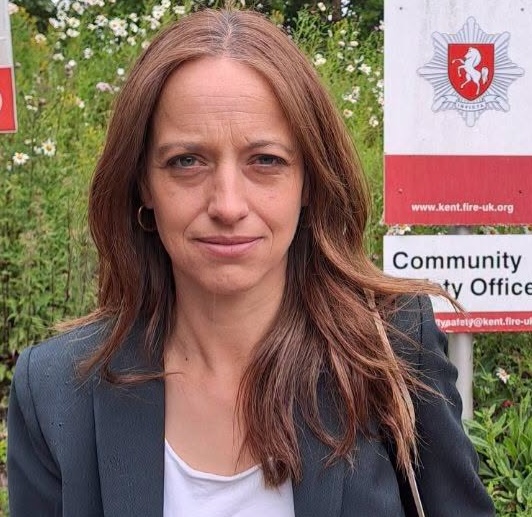
One Kent MP, Helen Whately (pictured below), who represents Faversham expressed strong criticism of the government, stating: “The Labour Government is clearly determined to destroy Kent. Kent has a history going back over 1,000 years and a proud identity, but they care nothing for that. It’s an abomination.”
Helen Whately continued: “Kent as a county has real clout with Government – it looks like Labour is so scared of Kent they have decided to destroy it. The reorganisation plans say nothing about a Mayor for Kent or strategic authority for the county. We are just to be broken up into four parts with no single voice to represent 1.6 million residents.”
Helen Whately continued: “Meanwhile, other counties and regions are getting Mayors with extra powers, and extra money. Kent risks being overlooked and left behind. Even if a Mayor or strategic authority is on their way, they will come after the Kent-wide infrastructure has been disbanded and absorbed into the four new councils. This is madness. Any savings made from the reorganisation will quickly disappear.”
The current Independent Councillor on Tunbridge Wells Borough Council, David Hayward, (pictured below) said: “Having a quick look I would suggest the new (West Kent) Unitary will, politically, be of no overall control. In my view that is a good thing.”
David Hayard continued: “Independents, like me, will find it very hard to win a seat against the massively funded national parties. One delivering notoriously misleading messaging. Still, I’ll give it a go!”
It is understood that voting will take place next May along existing county election boundaries but with 3 councillors elected in each seat instead of one. Tonbridge Central and Maidstone Central wards would be split to avoid them having to elect 6 councillors in the one seat.
At a point where the Conservatives hit a low in popular support less than a year after their general election defeat, the 28 KCC seats in West Kent in May 2025 were won by Reform 12, Liberal Democrats 8, Conservatives 5 and Green Party 3.
This could suggest a coalition of right of centre parties is likely to control the West Kent Unitary Authority when the vote take place next year.
Stuart Jeffery, Green Party leader of Maidstone Borough Council said: “It marks a new beginning for West Kent. We are committed to working with our partners to shape a council that delivers the very best for our communities.”
Antony Hook (pictured below), Leader of the Liberal Democrat Opposition on Kent County Council commented: “Whether we like it or not, it is clear Local Government is going to be reconfigured.”
Anthony Hook continued: “Reform UK’s madcap plan to merge the whole of Kent and Medway into one huge mega-council that would he hopelessly remote from local communities has been rejected and I am delighted that we have been saved from that.
Anthony Hook stated: “The option selected by government is not my preferred choice but if it is happening we need to put the public first. That means getting council services, like social care, libraries, public health and SEND ready for transfer seamlessly to new councils in just 20 months’ time. We need to make sure those services are ready to go, serving people who need them, under the new councils from day one.”
Anthony Hook concluded: “Reform UK have talked about judicial review (JR) to stop local government reorganisation. That will require a lot of money that will be better spent on services. JR should only be pursued if independent legal counsel advises that it is likely to be won. If the council gets legal advice it should be shared so we can see whether money is being used responsibly or wasted on political grandstanding at taxpayers’ expense.”
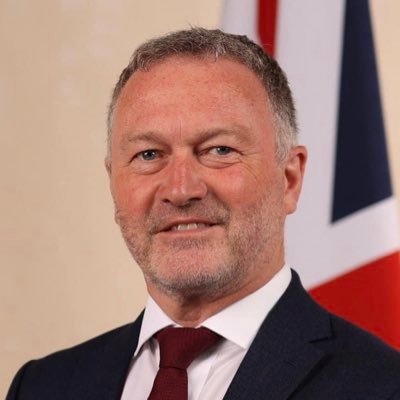
Following a government consultation which attracted around 3,000 responses, the Secretary of State Steve Reed, (pictured below) said: “We’re shaking up local government so that people get the services they deserve – cleaner streets, better care, and money spent on what matters most to local people.”
Steve Reed continued: “These reforms create stronger, more efficient councils that lay the foundations for real devolution and the economic growth that will bring new jobs and opportunities to communities right across England.”
The government believes its changes will end unnecessary duplication and create one finance department and one set of senior leaders instead of many.
In a statement, Kent and Medway’s council leaders said: “All of the councils in Kent and Medway have a long history of working closely together to do the very best for the people we serve and that will not change one bit.”
The statement continued: “This is the start of the process of bringing our different teams together with the aim of designing then delivering the best possible services for the people we serve.”
The leaders concluded: “Of course, this change affects the thousands of council staff across the county who work incredibly hard day in and day out. Our focus will be supporting them through this change while helping them to carry on delivering our business-as-usual services seamlessly.”
Meanwhile in East Sussex and Brighton and Hove, 7 councils are being reorganised into 2 unitaries with boundary modifications.
The government decided that Brighton and Hove’s area should be expanded to boost its planning footprint and tax base in order to “tackle housing unaffordability and support growth across connected communities”.