
A council meeting in Tonbridge and Malling has refused to progress with a plan to build the 20,000 new homes demanded by the Labour government, but the decision was then immediately overruled by the government.
The vote to pause the Local Plan was described as “irresponsible” by the Liberal Democrat group. But Conservative councillor, Sarah Hudson, said continuing with the plan would be “irresponsible.”
Meanwhile, a campaigner in Tunbridge Wells, Jonathan Hawker, has spoken about the “anger” in the community about water scarce areas of Kent being told to accept vast new housing estates, as a Kent petition opposing mass housebuilding hit 18,000 signatures.
The Conservative leader of Tonbridge and Malling Borough Council, Matt Boughton, argued that a recent formal statement from South East Water was the key reason to pause the progress of the Local Plan which lays out where houses should be built up to the year 2042.
South East Water had said it could supply only an extra 317 homes a year across the Borough. That’s less than a third of the 1,097 new homes annually demanded by the government.
Matt Boughton said he would be writing to the Government today (Friday) to “urge them to work with us to find a way of progressing the Local Plan which recognises the water supply challenges we have.”
Matt Boughton (pictured below) said unless there was a clear new plan to increase water supply, the government should reduce the house building target for Tonbridge and Malling.

But hours later Matt Boughton revealed that the government sent its own letter on Friday ordering the local council to put the plan forward for public consultation anyway. He said: “We don’t think that’s right”.
Matt Boughton said: “It flies in the face of the devolution agenda, aimed at empowering communities, that the Government should use its powers to overrule democratically elected Councillors and insist we proceed with the Local Plan, despite there being no guarantee of water supply for around 13,000 homes.”
At last night’s council meeting, Matt Boughton thanked the 2,206 residents who responded to the earlier Local Plan consultation last year and the further 2,150 people who attended one of the 27 public meetings the council organised to discuss it.
The Green Party members also voted against progressing the Local Plan until infrastructure issues were resolved.
Green Party councillor Anna Cope (pictured below) issued a statement which argued that the Conservatives had failed to focus on building genuinely affordable homes.

The Green Party statement said: “This evening at full council a sudden amendment was sprung on the meeting asking us to stall the local plan and work with South East Water. We in the Green group obviously support that work – anyone with half a brain can see this is sensible.”
The Green Party continued: “However we are extremely disappointed that TMBC has now failed twice to deliver a local plan. The last local plan that was to cover 2011-2031 and deliver approx 15k houses was rejected by the then Conservative government. This has meant developers have run riot ever since, building for profit rather than providing what local people need.”
The Green Party argued: “We have frequently pushed for an arm’s length housing company to buy and develop land on our own terms to provide the social housing local people desperately need. They chose not to.”
The Green Party concluded: “The current administration must take responsibility for this and we call on them to work with SEW to agree what housing could be supplied and ensure that the houses that are built are the social housing we so desperately need.”
The Liberal Democrats in the Borough took a different approach, voting against a delay to progressing the Local Plan. Cllr Frani Hoskens (pictured below) issued a statement on behalf of the the Lib Dems.

The Lib Dem statement said: “If the water is not sufficient for a planning application, then that application would be refused.”
The Lib Dems concluded: “Leaving us without a local plan leaves us at risk of it being called in by central government who will apply new legislation leaving us with no control and adding to the number of properties we will be expected to provide. This is irresponsible.”
But the decision not to progress the Tonbridge and Malling local plan was welcomed by Tunbridge Wells water campaigner, Jonathan Hawker (pictured below), who runs the “Dry Wells” Action Group.

Jonathan Hawker noted on the Nextdoor site: “It is interesting indeed that such a sensible decision was not made in Tunbridge Wells, the town in Kent that has suffered the most and longest water outages in the country.”
Jonathan Hawker said: “This begs the question- why did our council agree to hundreds of new houses across the borough, knowing full well that South East Water is struggling to supply existing homes, businesses, schools and medical facilities?”
Jonathan Hawker continued: “The answer is party politics. Our MP, Mike Martin…supports the new developments. And that’s the position of his fellow Lib Dems who control our council.”
Jonathan Hawker said: “Anyone who is not driven by party political ideology can surely see the issue: if we add more houses to an already routinely failing water infrastructure, it will make things worse for existing homes.”
A map showing the planned new builds south of Tunbridge Wells (connected to the move of the Rugby Club into Sussex) is shown below:
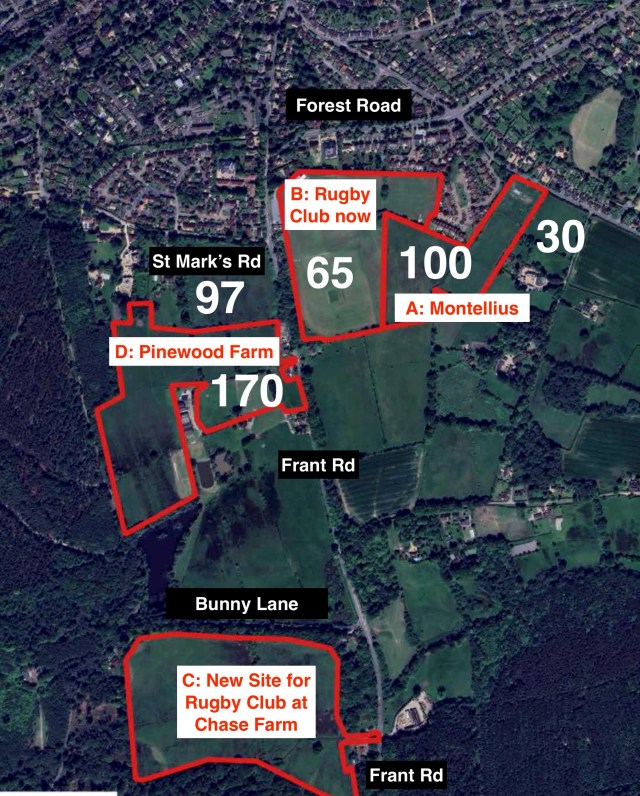
Jonathan Hawker also discussed the shortages of dentists, school places, GPs and the loss of farmland, concluding: “Dry Wells Action is not a political group but we feel the anger in the community about the lack of regard for people who’ve had to live without water again and again.”
Jonathan Hawker concludes: “We therefore urge councillors of all political persuasions to serve the people you represent and find ways to push back on a policy that ignores the reality in our community. Anyone who supported the local plan which was passed here in December should hang their heads in shame.”
A Conservative Tunbridge Wells Borough Councillor, Tom Mobbs, agrees that Tunbridge Wells should not be accepting the government’s housing targets. He points to a petition which residents can sign opposing mass house building that will be presented to parliament found here:
https://www.haltthehouses.com
One controversial housing scheme proposes 66 homes in a field currently used for grazing horses in the picturesque Medway Valley near Wateringbury (shown below).
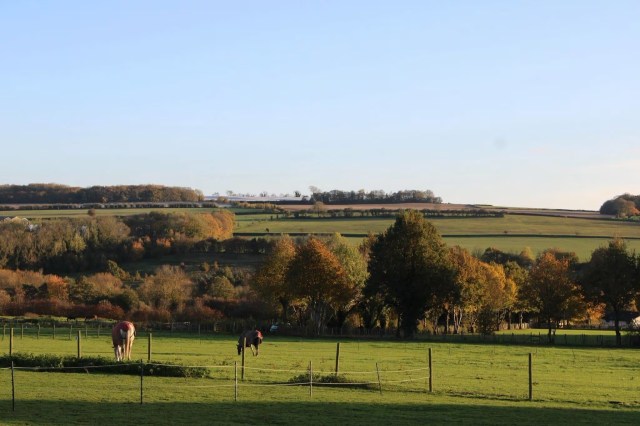
Councillors and campaigners from “Protect Medway Valley” are trying to reject the planning application in part because it would worsen traffic congestion at the Wateringbury Crossroads junction, which is confirmed by the council’s Air Quality Action Plan 2022 as the most polluted junction in all of Tonbridge and Malling.
Conservative councillor Sarah Hudson (pictured below), who lives in Wateringbury, said she supported the motion to reject the Local Plan, due to insufficient water infrastructure, highways concerns and foul drainage worries.
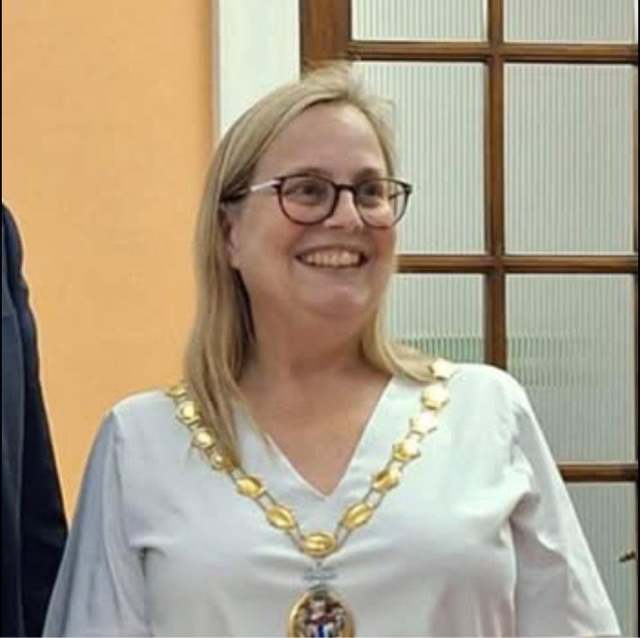
Cllr Hudson said: “Rejecting the Local Plan in its current form wasn’t about opposing development for the sake of it. My concerns were about whether the scale and location of the development being proposed were genuinely sustainable and whether sufficient consideration had been given to the impact it will have on our communities.”
Cllr Sarah Hudson explained: “One of my biggest concerns is water supply. We are already living in an area where water resources are under significant pressure…New housing must not be approved on the assumption that essential resources and infrastructure will somehow catch up afterwards.”
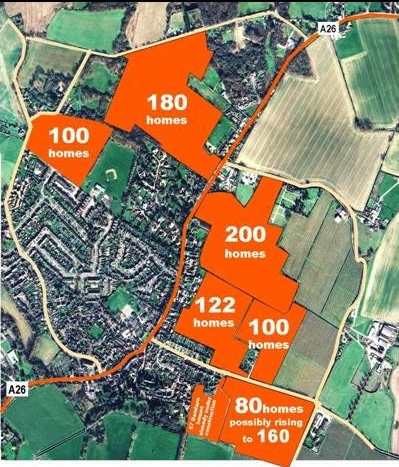
Meanwhile, a group has been formed in Hadlow to oppose the Local Plan housing allocations there. The “Hadlow Opposes Mass Expansion” campaign has published this map of new homes planned before 2042.
Cllr Hudson said she remained “deeply concerned” about the loss of green spaces and open countryside, arguing: “These spaces are not simply empty areas waiting to be built on. They are an essential part of the environment, provide opportunities for recreation, support wildlife and biodiversity, help with drainage and flooding, and contribute enormously to people’s quality of life.”
Cllr Hudson explained: “There is also a very real danger that the continued expansion of housing will cause our villages to lose their individual identity and character. Our villages have developed over generations, each with its own history, landscape and sense of community.
Cllr Hudson concluded: “If development continually joins settlements together and surrounds villages with large housing estates, we risk losing what makes these places special in the first place.”

