
Way back on 3rd March 2019, I published one of my most successful blogs. It was about the history of the road I live in: Pennington Road.
If you missed it, do click on this link:
https://southborough-news.com/2019/03/03/wanted-old-news-about-pennington-road/
I followed it up with an article about the history of Brooklands School that was once a stunning building in Pennington Road:
https://southborough-news.com/2022/11/15/brooklands-school-in-pennington-road/
And I explained how we had managed to trace the residents of our own house back to someone whose family had moved here in the 1950s to look after an aunt – Isabella Gallard – who had lived in our house in the 1890s. We even unearthed a picture of her on a horse! Read more here:
https://southborough-news.com/2021/02/07/a-successful-hunt-for-our-homes-history/
I have since learnt that Amelia Scott (who gives her name to the Tunbridge Wells library) was almost certainly a resident of two homes in Pennington Road. Her family lived in the current 40A until her father died. Then they apparently moved into our house number 36, with a Mrs Scott living in number 36 in 1867 according to the Kelly directory.
I have also now added an update to the original article, with a few extra details and refinements. This is the updated section, but do read the original if you haven’t seen it.
UPDATE AUGUST 2026:
I have discovered that after Park Road the house number changes in 1891 were a little more complicated and they didn’t all just double on the south side of the road.
That’s because a semi-detatched house on the eastern corner of the Park Road junction (which still exists) seems to have been given a new number in Park Road in the 1891 change (number 36) when it was previously 25 Pennington Road.
Therefore the terraced houses on the south side which were built by and all owned by Richard Hobbs (who bought the land from Mary Castle) were renumbered from 27-31 to 52-60.
A further complication is that after that another house number seems to have been added when the 1891 renumbering happened. So the famous house number 36 occupied by a Baroness in 1881 (and then the VAD Crothers hospital in 1914) does seem to have doubled to number 72.
All the original Pennington Road numbers from 1881 are in brackets in the maps below and the numbers used from the 1891 census (and up to now – unless demolished) underneath are them. It should help you to look up who lived in each house through time.
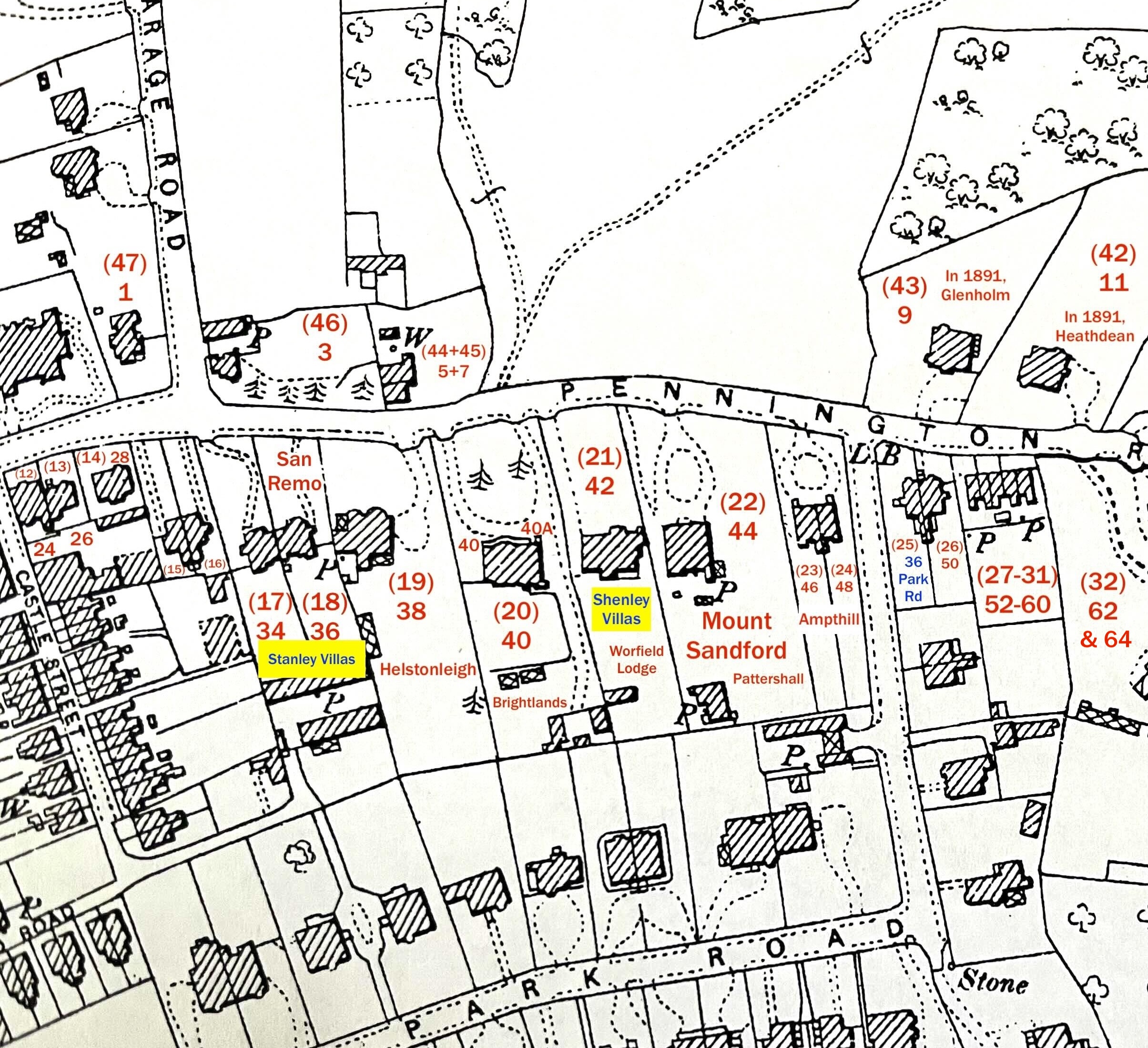
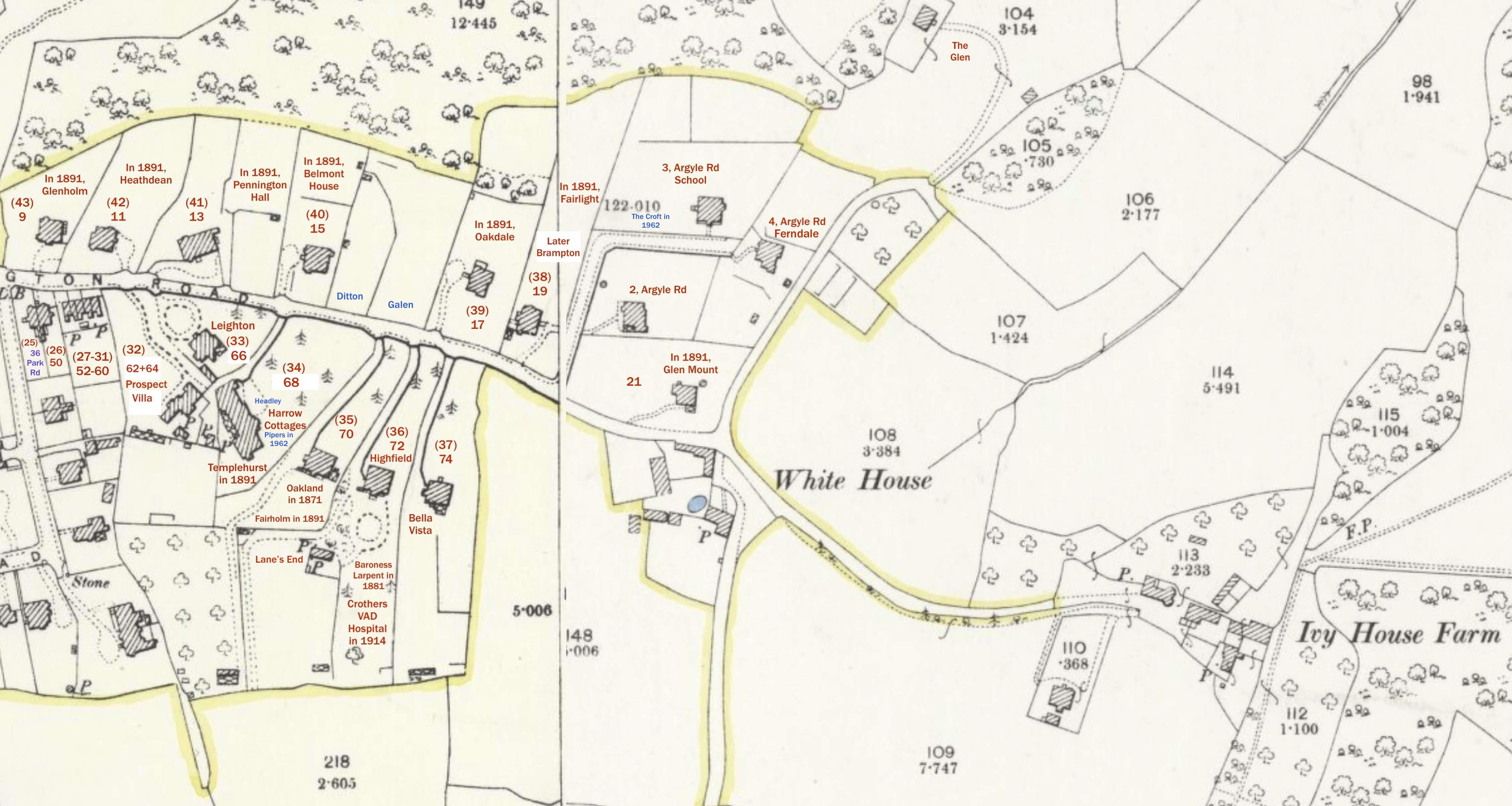
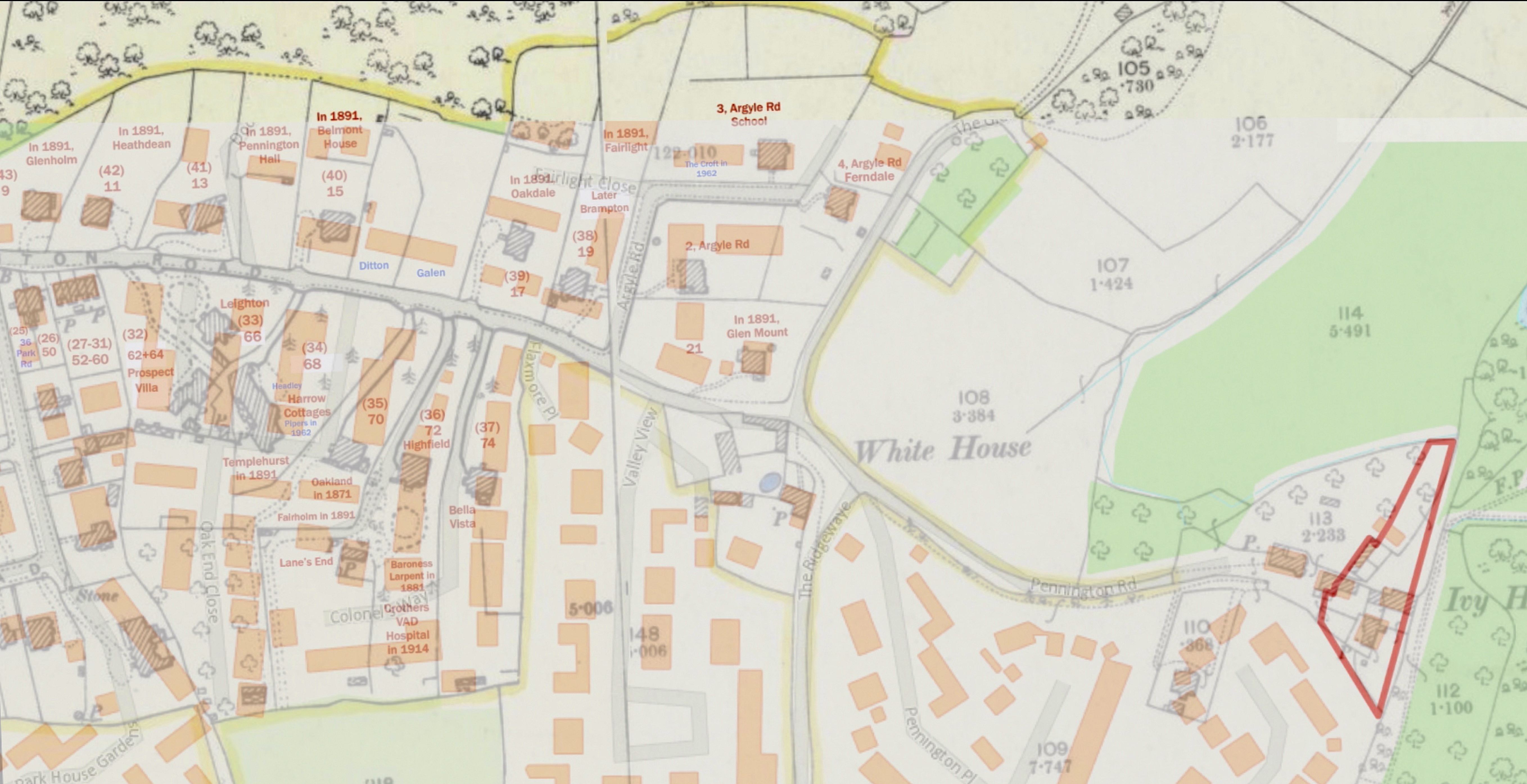
Superimposed on this map is an indication where today’s roads are east of Park Road, still showing the “ghosts” of the old villas, including the old number 72 villa which once housed the Baroness de Hochepied Larpent:
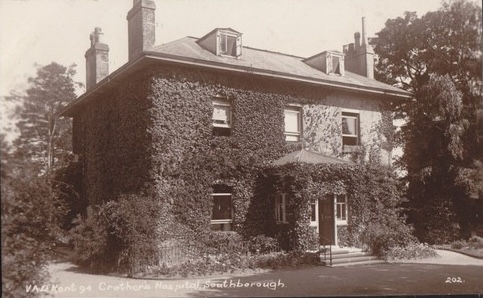
Here is a picture of number 72 (in the new numbering system), which housed a hospital during the First World War – the VAD Crothers Hospital. Here is a picture of the back of it – on what looks like a warm summer’s day in about 1917:
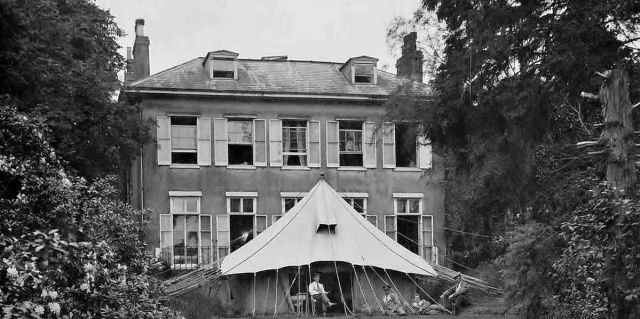
The Voluntary Aid Detachment (VAD) was a voluntary unit of civilians providing nursing care for military personnel.
Robertina Crothers owned number 72 (it is in what has now become Colonel’s Way) but was living in another impressive house, which she also owned, coincidentally the Gallard’s former house now number 24 near the London Road end of Pennington.
A Courier article of 18th September 1914 reported that 72 Pennington Rd had been placed by Robertina Crothers “at the disposal of the Committee”. The committee concerned was tasked with offering accommodation to injured Belgian service people.
Here is the house number 72 from the front.
Here are some further maps showing how the eastern side of Pennington Lane then Pennington Road was developed. First a map from 1860.
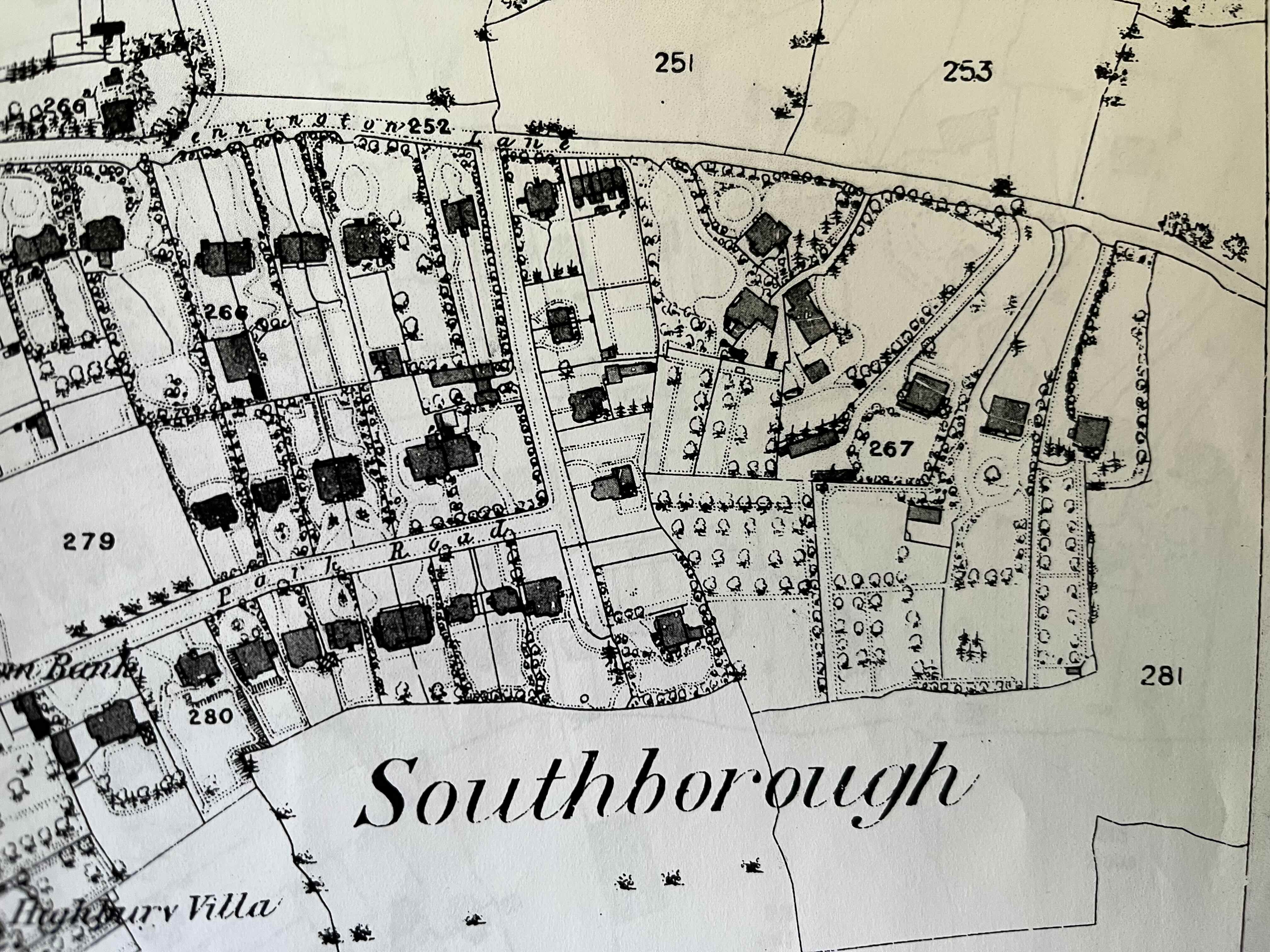
The 1860 map above stops before the eastern end of Pennington Road. But other maps show that number 37 (later 74) was the last house on the south of Pennington Road before White House Farm and Ivy House Farm.
In 1868, there were still only 3 buildings to the north of Pennington Lane: St Thomas’s Church, St Peter’s Parsonage and the building we now call “The Old Dairy”, which is now number 7 (and was number 44 and 45 when they were two houses).
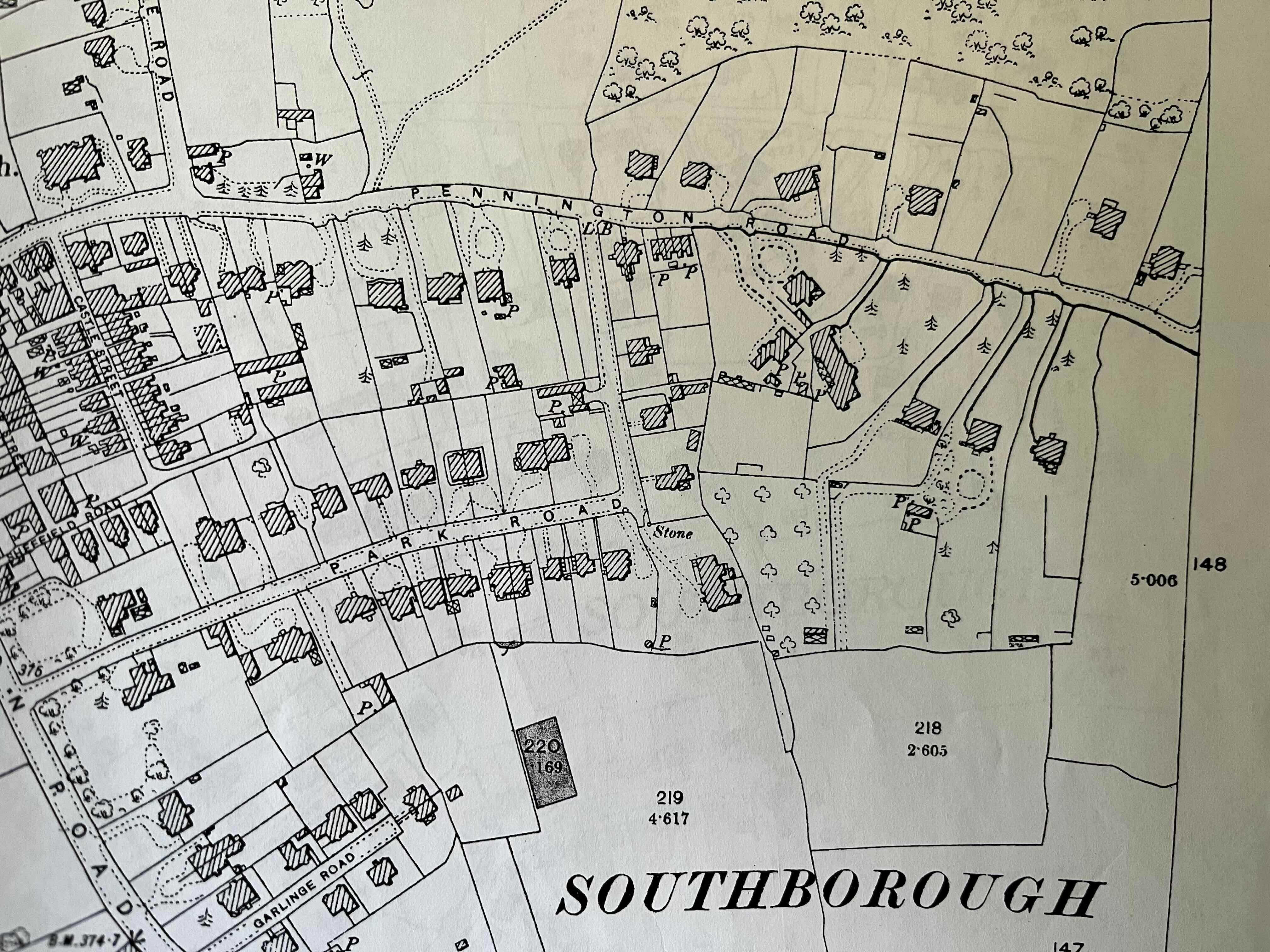
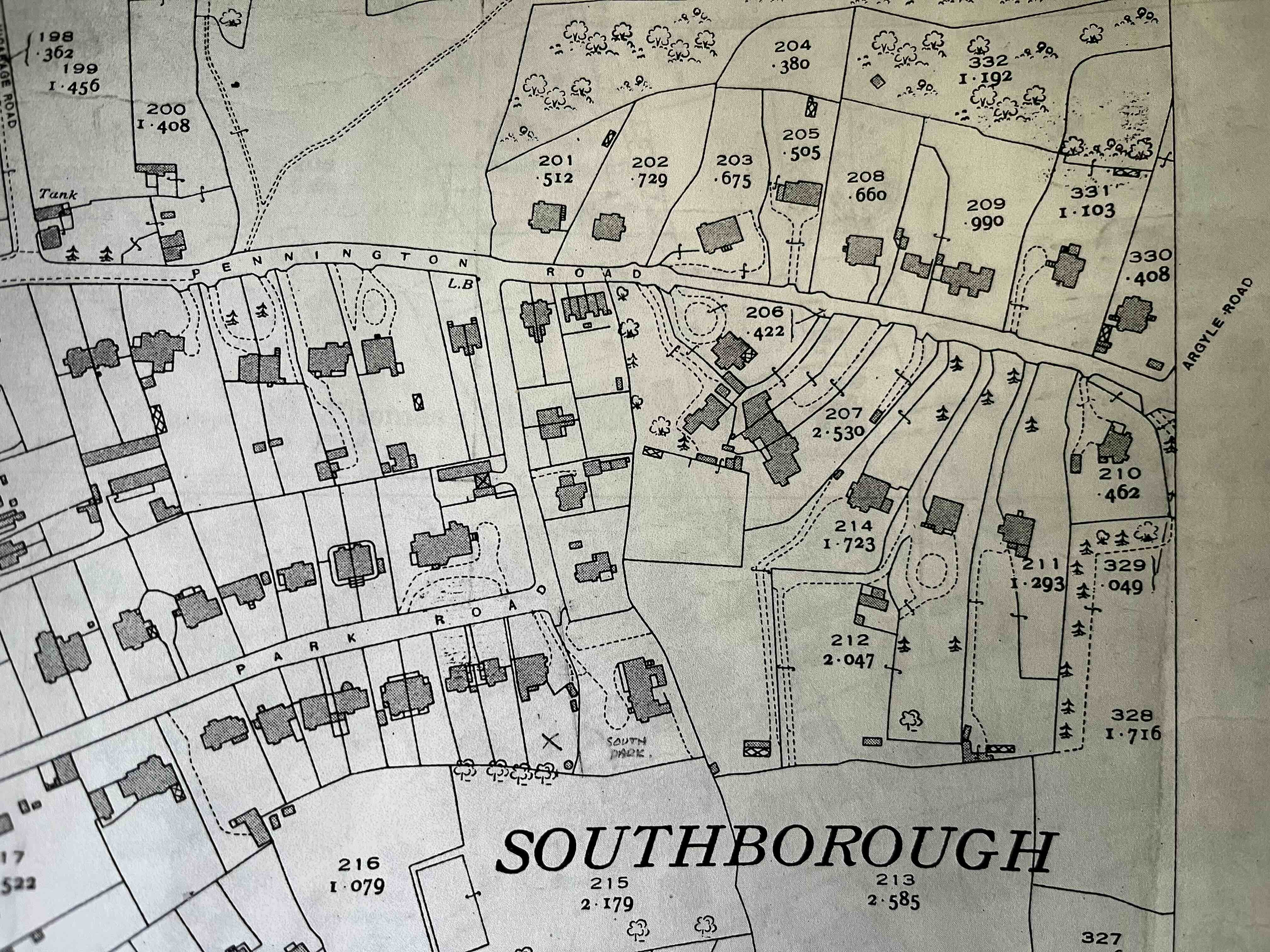
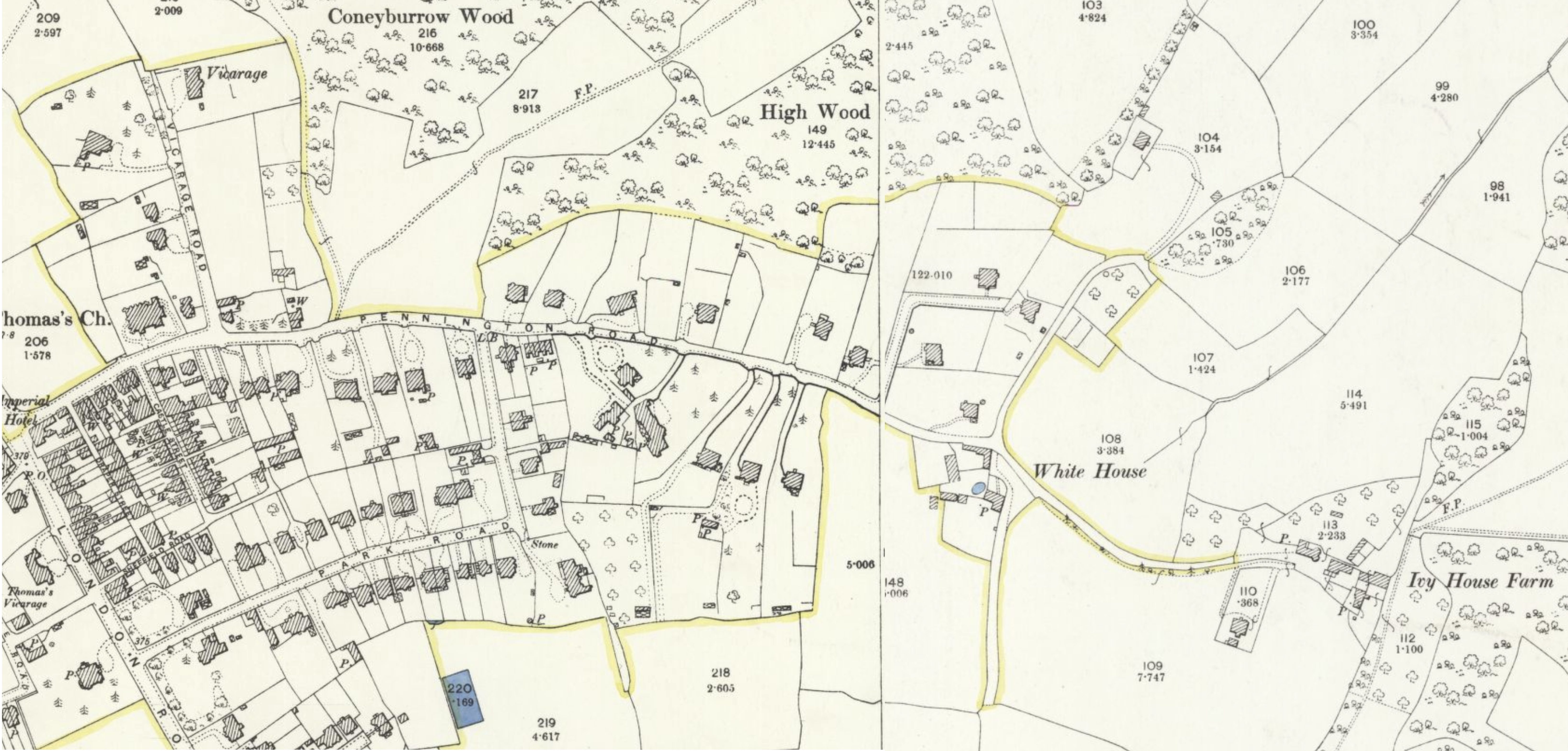
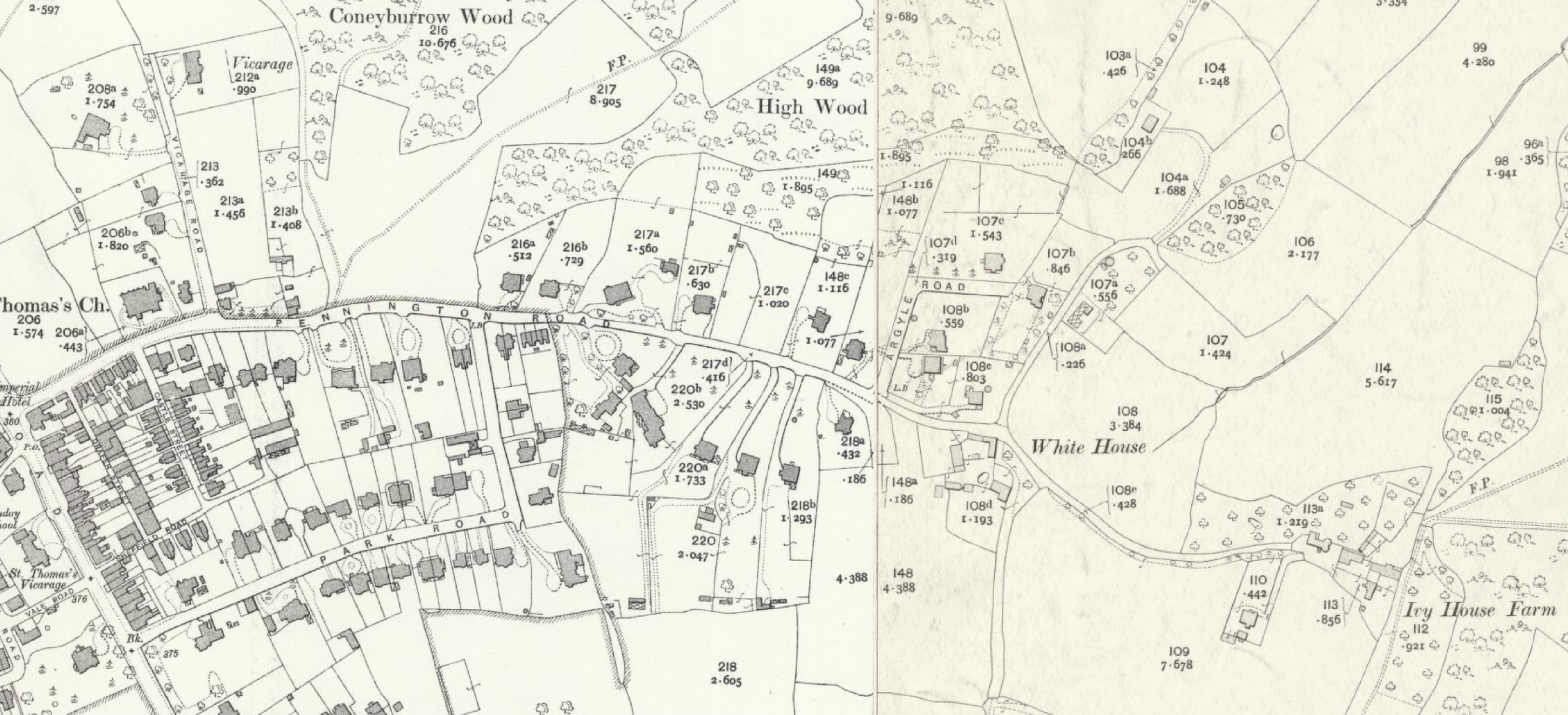
But in the next 30 years more buildings appeared on the north side – see these maps below – picturing Pennington Road as far as Argyle Road – from 1896 and then 1936.
And here are maps showing the full length of Pennington Road including Argyle Road, first from the 1895 survey then 1907:
I have also just found this quote (source Courier 5 July 1963) said to be from a “Guide to Southborough” in 1885 by E. Paget Thurstan: “Speaking broadly the better classes are composed of retired military and naval men, clergymen with private means, gentlemen of moderate private fortune and the usual sprinkling of professional men, clergy, medical men and schoolmasters…and one or two gentlemen who have taken up farms in the neighbourhood.”
I have also compiled this PDF showing the detail of early residents of Pennington Lane then Pennington Road, which you can download here:
If you have any more information about Pennington Road’s history, do get in touch by leaving a comment on this story.

