
The MP for Tunbridge Wells has been accused of hiding the true impact of house building by stating that new homes were adding only 1% to the local housing stock when a 33% rise in households in the next 16 years is now planned.
Mike Martin MP was involved in a discussion on BBC Radio Kent on Wednesday morning with Jonathan Hawker of the Dry Wells Action residents group which is trying to prevent future disruptions to the water supply in the town.
Mr Martin (pictured below) was asked if he would back efforts to halt the building of new housing estates – as they were adding to the burden on the water supply network.

Mike Martin replied: “I’m afraid that if we look at Tunbridge Wells, there are 670 houses built in the constituency, and these are targets that are given by the central government to the local planning authority.”
Mike Martin continued: “If you look at that number of houses spread across the 50,000 or 60,000 houses that there are in my constituency, I’m afraid the problem is not housing growth.”
Mike Martin then stated: “The problem is the 20 years of under investment, places like Pembury, it’s Pembury that falls over. It’s not the 0.5% or 1% increase in the housing numbers.”
It is clear that Mike Martin’s figures of a 1% increase in households only refer to what Tunbridge Wells Borough is now required to build every six months.

The latest government target is for 1,098 dwellings a year in the Borough from 2029 to 2044, which would increase the number of households from around 54,000 to 72,000 – a 33% increase.
You can listen to the exchange on BBC Radio Kent on this link:
https://www.youtube.com/shorts/EFPCIAempCA
When challenged on why he wasn’t strongly challenging government housebuilding targets, Mike Martin MP replied: “My job is to focus on what is going to make this better. Grandstanding about housing numbers when nothing can be done about them because they’re central government targets will not make this problem better.”
After the live interview, Jonathan Hawker of Dry Wells Action (pictured below) told Southborough News: “Mike Martin is failing his constituents by trying to play down the true number of houses being imposed on our community, with their corresponding and obvious impact on water, education, health and roads. That he thinks building more homes and increasing demand for water at a time when South East Water is struggling beggars belief.”

Jonathan Hawker continued: “Perhaps if he deigned to host a constituency surgery for the first time since he was elected, he might learn what local people think of him ignoring existing residents to support a government policy that will clearly increase the risk of future water outages in Tunbridge Wells and beyond.”
Jonathan Hawker concluded: “New homes do nothing to increase the amount of water reaching our taps. We need to give South East Water time to address the water infrastructure issues before building ourselves into disaster.”
A petition organised by six Kent and Sussex MPs, including the Conservative MP for Tonbridge, Tom Tugendhat (pictured below), called “Halt the Houses” has now recieved 24,000 signatures.

Details of the petition, click here:
https://www.haltthehouses.com/
South East Water has already warned local councils that existing water infrastructure cannot support proposed housing growth. In Tonbridge and Malling, South East Water told the Council that its plans could only supply water for around 6,300 additional homes, while Government housing targets require almost 20,000 homes to be built.
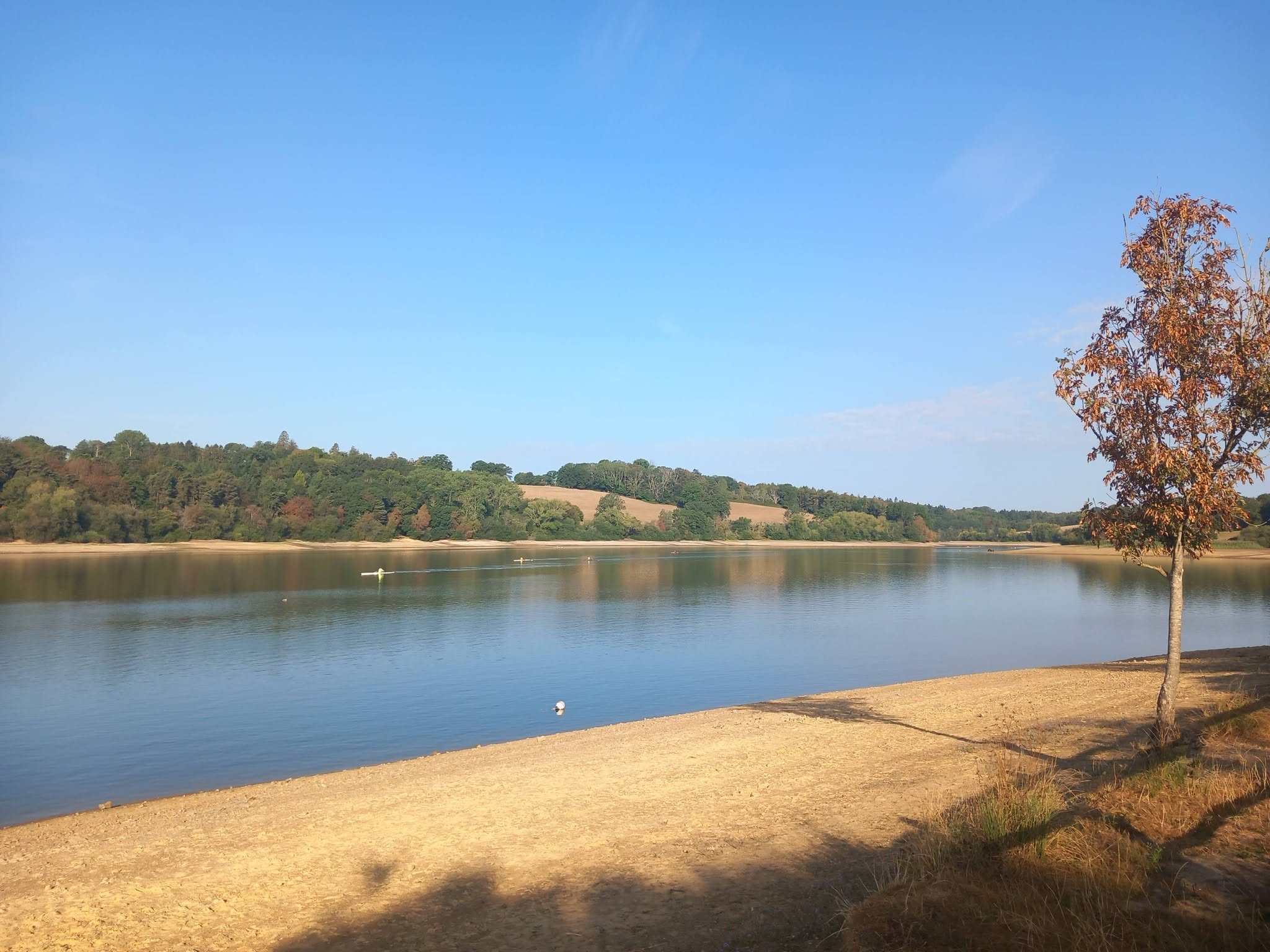
The lack of rainfall over the past year has led to new warnings of water shortages. An area in Sussex was said this week to be in “severe drought” with South East Water’s Ardingly reservoir (pictured below) only 19% full.
Tunbridge Wells Borough Council recently extended its “call for sites” where it is looking for places to put the houses the government requires. The deadline is now 26th October.
In response to Jonathan Hawker’s comments, a spokesperson for Mike Martin said on Thursday that Mike does hold regular surgeries when a constituent asks for one. But fixed surgeries like Greg Clark held were not advertised in advance “based on advice from the parliamentary security team.”
Mike Martin’s spokesperson also said that South East Water would be legally obliged to provide more water based on new housing demand.
But over the summer, South East Water gave detailed reasoning on social media on why increasing supply is so difficult, explaining that building new reservoirs is rarely an option.

In a social media post, South East Water said its staff were constantly asked why the company didn’t just build half a dozen new reservoirs across Kent and Sussex to fix summer demand spikes.
The company said: “The answer comes down to geology, river sizes, and physical space.”
South East Water’s post continued:
The ground swallows the water: To hold billions of litres of water without it draining away, you need thick, waterproof clay bedrock. Much of the south east sits directly on porous chalk, which acts like a giant sponge and lets the water soak straight through into the ground.
 There are limits to what our rivers can provide: A reservoir doesn’t fill up from rain falling into it. You have to pump massive volumes out of a nearby river during winter high flows. Local rivers like the Medway, Ouse, and Great Stour just don’t carry enough water to fill a major storage basin without drying out local riverbeds and killing off wildlife.
 Finding the right location: Kent and Sussex are among the most densely populated rural areas in the country. Flooding a valley to build a proper reservoir would mean knocking down entire villages, rerouting major roads like the A21 or M20, and digging up railway lines.
South East Water continued: “For years, we managed supply by upgrading existing pipelines, reducing leakage, and fitting water meters. That kept the system balanced and bills down without major construction. But with rapid regional growth, hotter summer heatwaves, and strict limits on how much water we can safely take from local rivers, that old approach has reached its physical limit.”
The company concluded: “We’re moving forward with our planned reservoir at Broad Oak near Canterbury because that specific site has the right clay geology and location.” Broad Oak (computer generated picture below) will be the second major reservoir to be built in the south east in the last three decades.
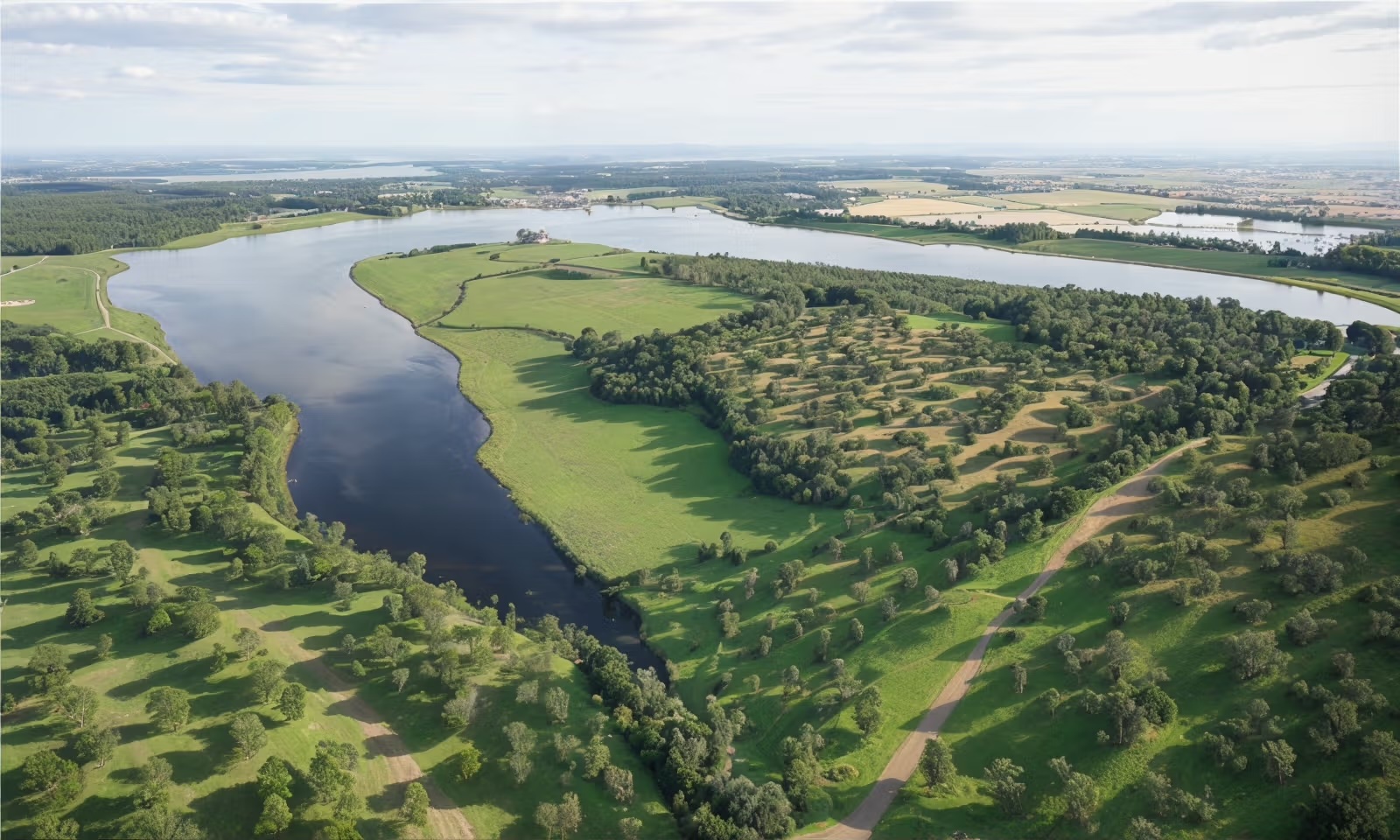
River water will be taken from the Great Stour and Little Stour and then held at the reservoir until needed, before being treated at a new water treatment works and pumped to homes and businesses.
The Broad Oak reservoir scheme originates from the 1940s, demonstrating just how long it takes to deliver new water supply. The land was purchased in the 1970s and South East Water aims to deliver water from the reservoir from 2035.
Bewl reservoir just south of Lamberhurst was completed in 1975 after the flooding of the Bewl River valley. It is now the largest body of inland water in South East England.


We in Tunbridge Wells are poorly served by our MP. Mike Martin was very quick to grandstand in calling for the resignation of the CEO of South Eastern Water last November, but is very reluctant to make local feelings heard when it comes to the need to address underlying problems with water supply in the area.
LikeLike