
Escalating costs involved in restructuring local councils in Kent could mean the changes never happen.
A shock announcement last Monday 7th September by the Labour government put on “pause” plans to abolish both Kent County Council and all the existing Borough Councils – with no timetable to resume the process.
Indeed, it was announced that voting next May – that was due to elect the new authorities – will now elect new members to the existing structures, suggesting the “pause” could be indefinite.
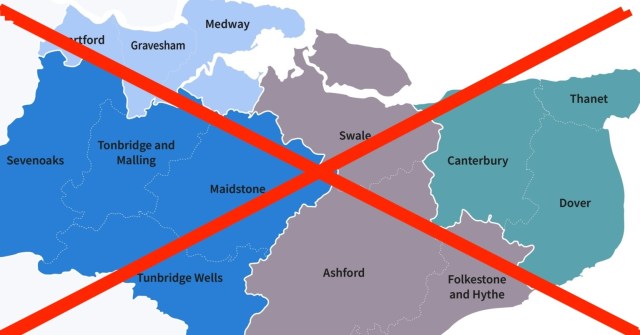
The Conservative leader of Tonbridge and Malling Borough Council called the situation “a complete mess”, while the Lib Dem Tunbridge Wells Borough Council said it was “very frustrating” and Kent County Council’s Reform UK leader said it was a “shambles.”
In Parliament, Local Government Secretary Angela Rayner (pictured below) told MPs that: “In light of legal advice, I want to satisfy myself firstly that the right process is in place, that it is robust, and of course complies with the law.”
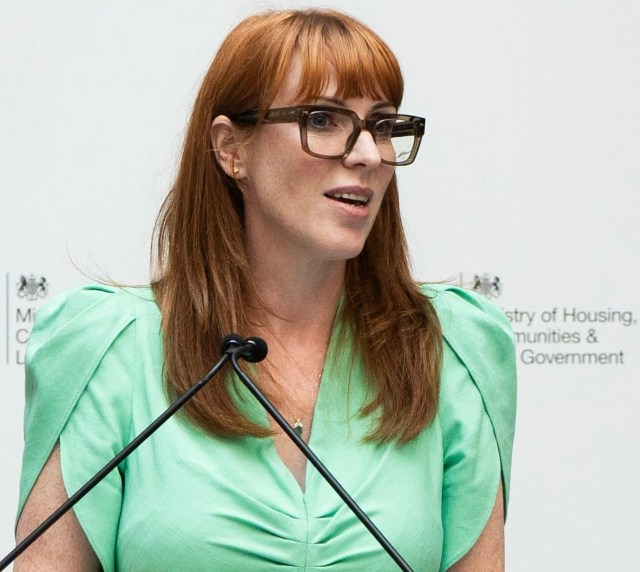
Ms Rayner added: “And secondly, I want to fully test whether our proposals for local government reorganisation meet the priorities of a new administration and a new prime minister and any additional considerations.”
Her statement was a clear hint that the new administration of Andy Burnham is trying to focus on its key priorities, like funding defence and social care. It doesn’t seem to want to get distracted by paying the escalating transitional costs of setting up new local authorities and winding up the old ones.
The government had tried to frame the initial council set up costs as ones that would be recouped later by later savings once the new structures were up and running. But the accountants seem set to veto that approach due to the decisions to create smaller sized councils than were initially suggested.
Latest estimates by accountants PwC for the County Councils Network suggested that new unitary authorities covering more than 500,000 people would save money, but authorities covering populations of only 300,000 people would cost money and provide no long term savings.

The PwC report put the bill at £ 850 million with no savings if every two-tier area was split into 58 unitary authorities with a 300,000 population.
The decisions in Kent meant two of the four new proposed authorities covered populations of only around 400,000 people.
The idea of unitary authorities is to simplify things for voters. But they would also add to duplication in Kent, with each unitary authority having to set up departments to run highways, education and social care – things that are currently done by Kent County Council.
Ben Chapelard (pictured below), who’s the Liberal Democrat leader of Tunbridge Wells Borough Council, described the government’s announcement as “very frustrating.”

Ben Chapelard said: “Together with our West Kent partner councils, we have put in significant time, energy and money to shape a new super council for our area. Our goal remains the same: to create a stronger council that can make a bigger impact on our residents’ lives.”
He continued: “The pause – and the lack of a timetable – from the Government, is disappointing. However, I am optimistic that if the review is quick and the Government allows us to get on with it, I think with the additional time we can make an even better start.”
Voters in Tunbridge Wells Borough will now go to the polls to elect a third of councillors to the existing Borough Council next May.
There was a stronger reaction from Matt Boughton (pictured below), who’s the Conservative leader of Tonbridge and Malling Borough Council.

Matt Boughton said: “Local Government Reorganisation is a complete mess entirely caused by the Government. The process has been characterised by u-turns galore and has wasted millions of pounds of taxpayers money and an awful lot of time.”
Matt Boughton continued: “If the Government wishes to bring this back then it will need to do an awful lot first to win back the trust from councils who feel extremely let down by its approach.”
In a video posted on Monday, Matt Boughton said he had been in Westminster to listen to Angela Rayner’s statement in the House of Commons. He said: “What she’s announced is the end of the local government reorganisation process. She said in the House of Commons behind me, that they would pause the process, but there’s no timing or indication as to what happens next.”
Matt Boughton concluded: “What a waste of time and money this has been. Over the last couple of years, we have put a lot into the reorganisation process…So (now) nothing will change. We will continue to serve everyone across the borough, and elections for Tunbridge and Malling Borough Council will now be happening in May next year.”
One factor that was contributing to escalating estimated costs of the reorganisation process is the prospect of legal challenges, which Reform UK has already begun in some areas and was considering in Kent. It’s possible that this was the factor that triggered the government statement last week.
The leader of Kent County Council, Linden Kemkaren (pictured below) of Reform UK said: “This is absolutely huge.”
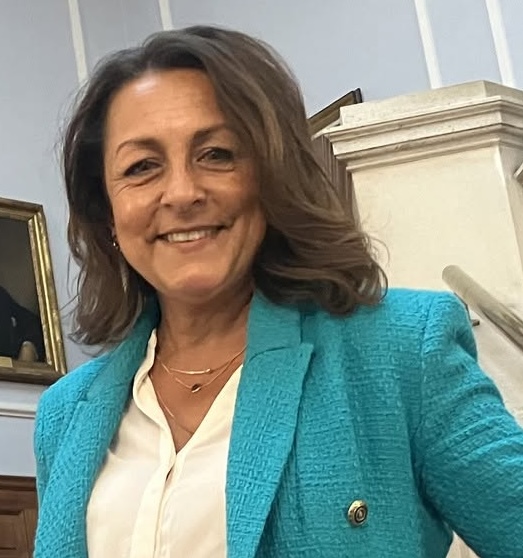
Linden Kemkaren stated: “We’ve been working on this for almost 18 months at the government’s instruction. It’s cost taxpayers around a million pounds so far and it’s taken up so much council time. And now what? Kent is left hanging. Staff have yet more uncertainty over their jobs.”
She said: “I mean you literally couldn’t make up this level of incompetence from the government. They clearly don’t know what they’re doing. What a shambles.”
Linden Kemkaren argued: “But this is yet another victory by Reform against a failing government. Several of our Reform-led councils were in the process of launching a judicial review.”
Linden Kemkaren continued: “Kent was about to follow suit as the Secretary of State had repeatedly ignored my letters, three in total, questioning the process behind the decision. Angela Rayner clearly didn’t fancy her chances in court, so she’s pulled the plug.”
A total of 14 local authority areas are being reviewed, while plans for Essex, Hampshire, Norfolk and Suffolk – only just approved by the government – have been withdrawn entirely. In Surrey, which is further through the process, the two new unitary authorities will continue to take over from current structures.

