
Tunbridge Wells Borough Council says that upgrades to its shopping centre will mean higher revenues from parking fees and “new retailers paying higher rents than the current occupiers of the space.”
The council has revealed that it expects parking charges in the newly refurbished Royal Victoria Place (RVP) shopping centre car park to rise by 4% a year for the four years following completion of the project (i.e. after 2029).
It also confirmed that the retailer TG Jones (formerly WH Smith) will lose its second floor space selling books, but the council says the store is a “valued tenant” and “confidential discussions are ongoing regarding its future space requirements.”
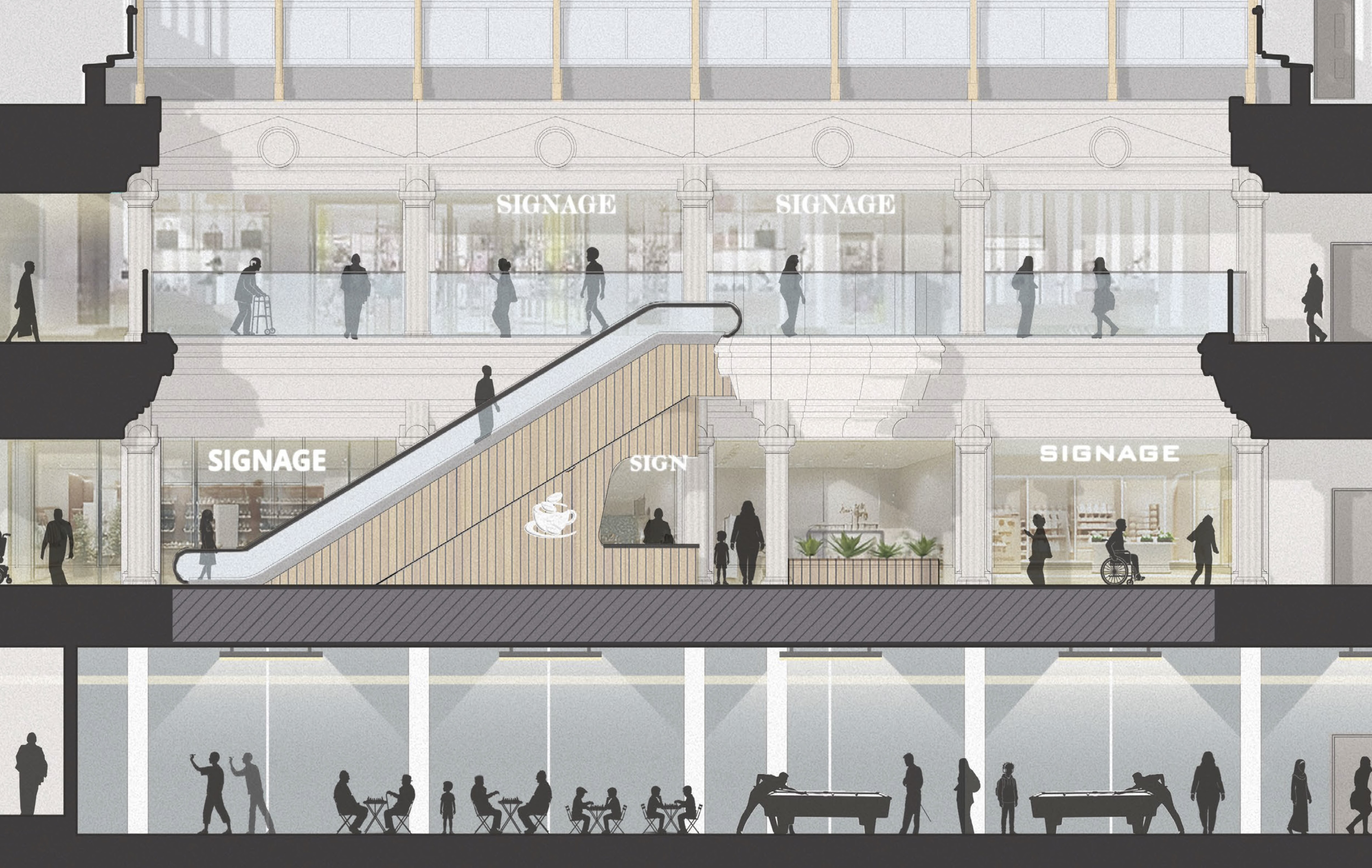
Southborough News has obtained detailed answers to ten key questions it asked on why the council is convinced its plans to spend £ 27 million on overhauling the Palm Court section of the centre (illustrated below) will be “self-funding”. The answers in full are given in this article.
The council has also reaffirmed that it will take out a loan over a lengthy period – 50 years – to pay for improvements to the RVP. Final council approval is almost certain on 11th November.
A £ 23.3 million loan will be needed, creating a bill of £ 1.5 million a year in interest and repayments, assuming a 6% interest rate. But the council is forecasting £ 1.8 million of increased revenue per year, giving it a forecast £ 315,000 profit every year.
This is a breakdown of the £ 1.8 million increased annual revenue the council is expecting, taken from earlier council documents:
| Appraisal base position Net Operating Income pa Development means that the council will no longer be paying business rates (most of which goes to central govt) on the vacant units in the food court or paying money to clean the empty shops so filling the shops will bring this benefit. | £ 188,000 |
| Net Operating Income Post Development increase pa Extra shopping centre rental income in Palm Court area from improvements per year | £ 1,141,346 |
| Wider Economic Revenue increase pa Council Parking extra income of £298,000 and new business rate revenue of £104,000 | £ 402,900 |
| Additional income from retained shopping centre | £ 34,406 |
| Fixed Rental Uplifts within existing lease arrangements | £ 25,392 |
| TOTAL Council additional revenue per year | £ 1,792,044 |
The council says:
- At the upper level, there will be better facilities, including improved access and new toilets, to make the space more comfortable and inclusive for everyone.
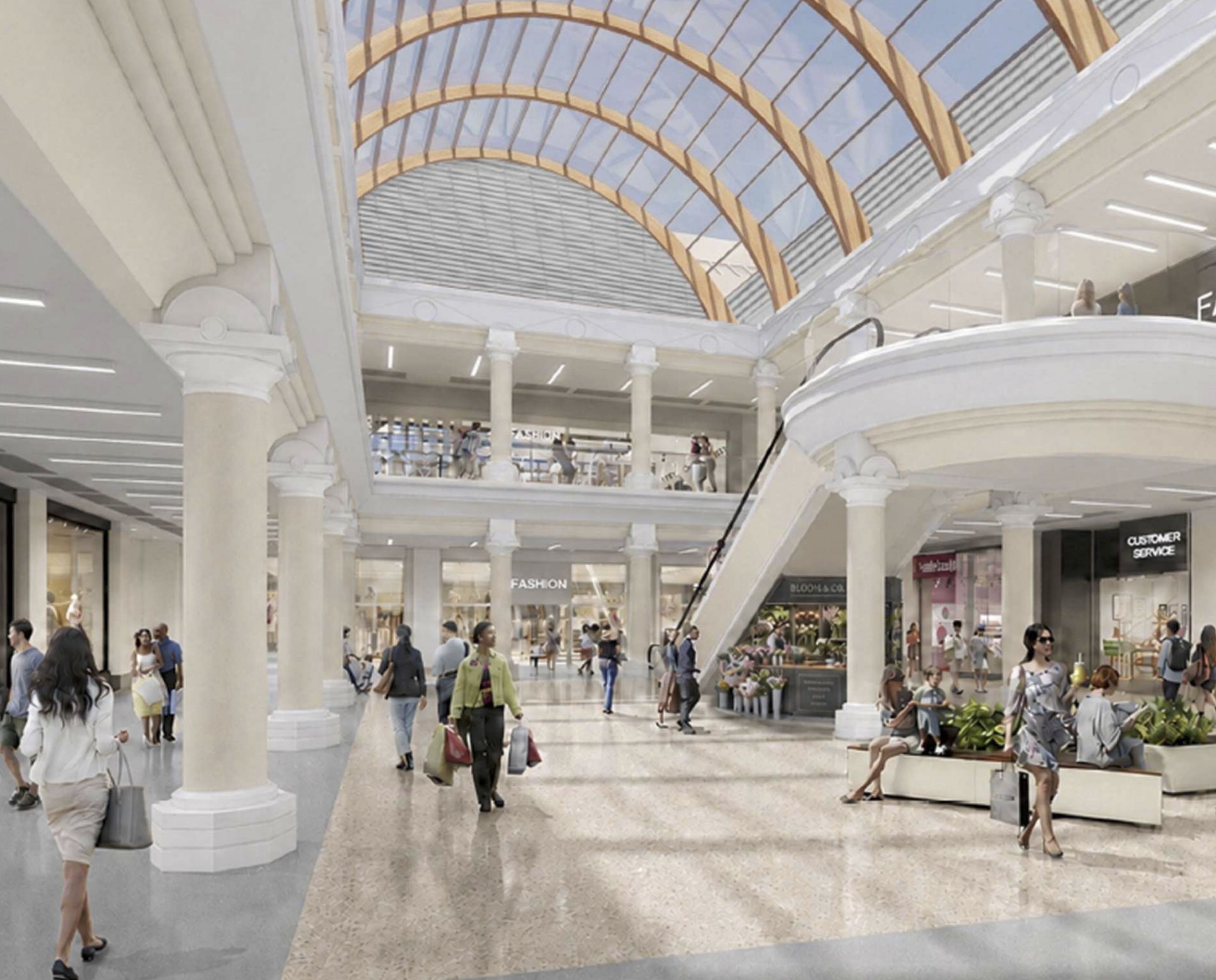
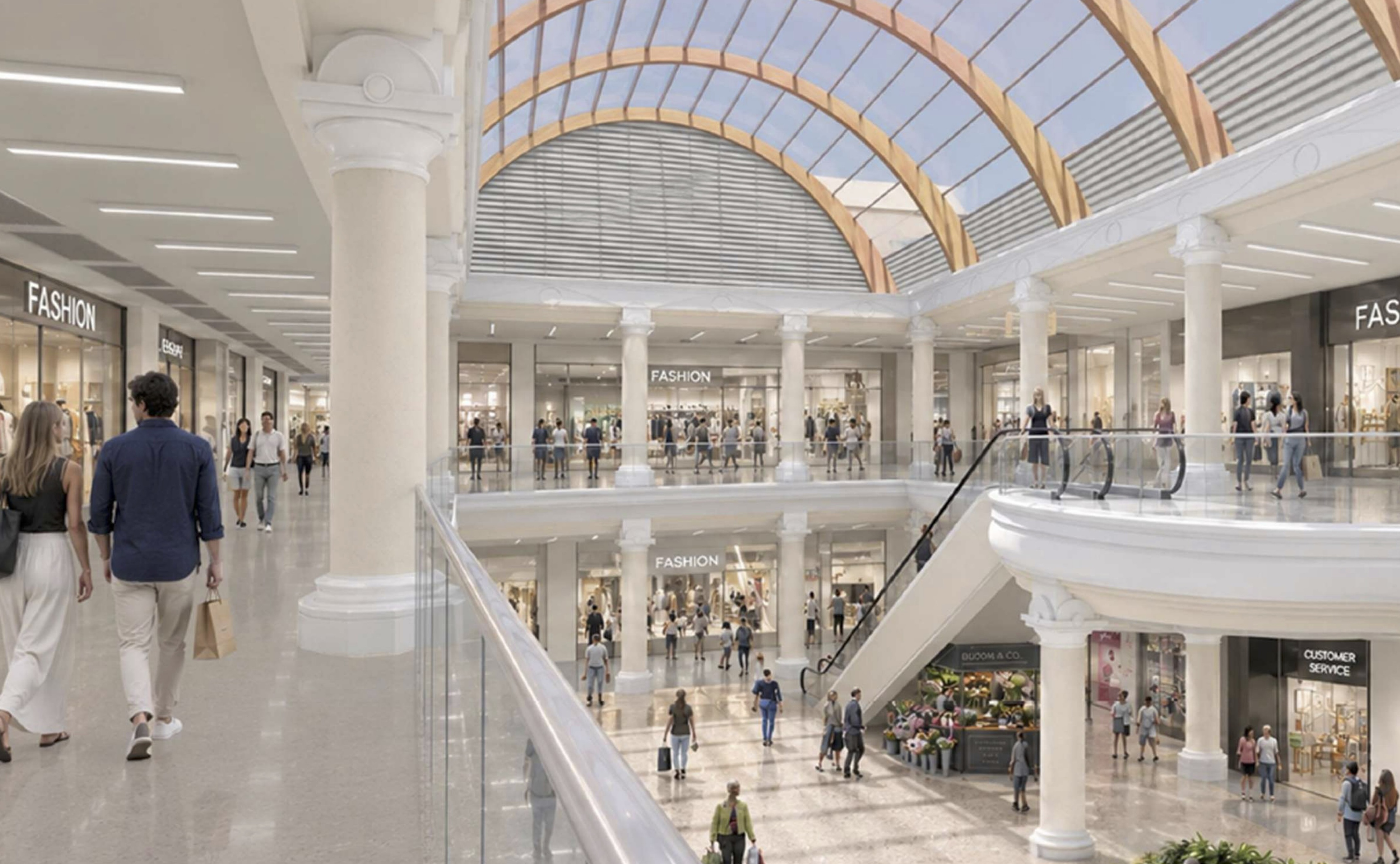
- The atrium itself will be redesigned to make it easier to move around and to create a brighter, more attractive atmosphere. This will include better lighting, new flooring, updated finishes, and glass railings.
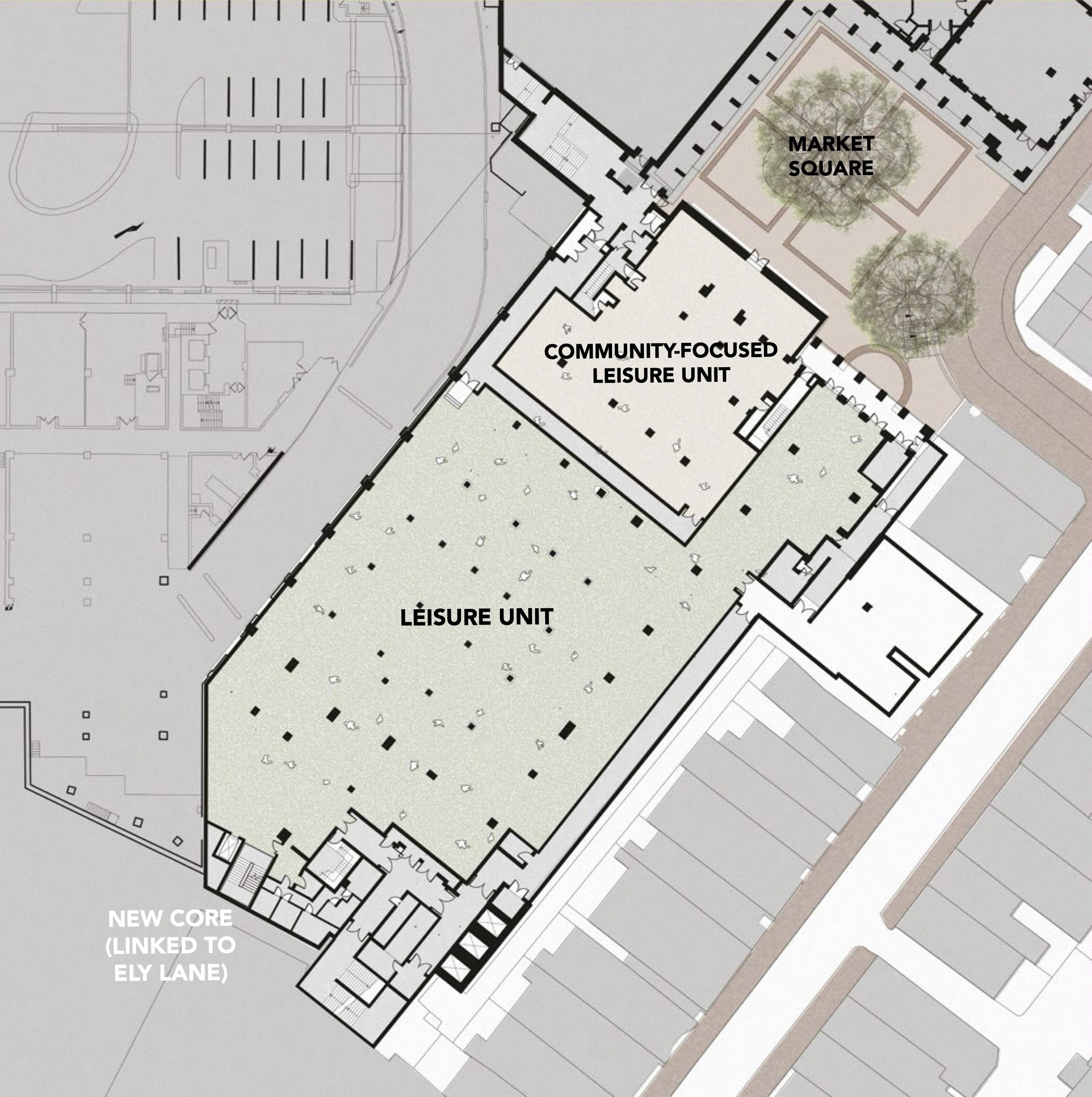
- The old basement food court will be turned into a new leisure area, with a direct link to Ely Court and potential space for community activities.
In the second phase, more borrowing will be needed to build the boutique cinema (pictured below) and demolish the snooker hall on Camden Road, taking council debt to at least £ 50 million. That second stage is due to go for planning approval in December and final approval in April.
Southborough News asked the council for clarification of the council’s business case for the £ 23 million loan for the Palm Court overhaul (about to be approved in November) and now prints in full the answers to the following questions :
Question 1: Why borrow over 50 years, given the last shopping centre layout only lasted 30 years?
Question 2: Is the extra area available for rent as a result of the changes really only another 5%?
Question 3: How does a 5% area increase produce a 24% revenue increase?
Question 4: Can the planned new basement tenants afford £61 per square foot?
Question 5: Are some stores on the first and second floor currently paying no rent?
Question 6: Will TG Jones books section be shut down?
Question 7: How is the £298,000 extra parking income calculated?
Question 8: Why spend £17 million on the atrium?
Question 9: How can you be sure a £0.9 million annual loss is not the outcome?
Question 10: What savings would be needed to keep council tax down?
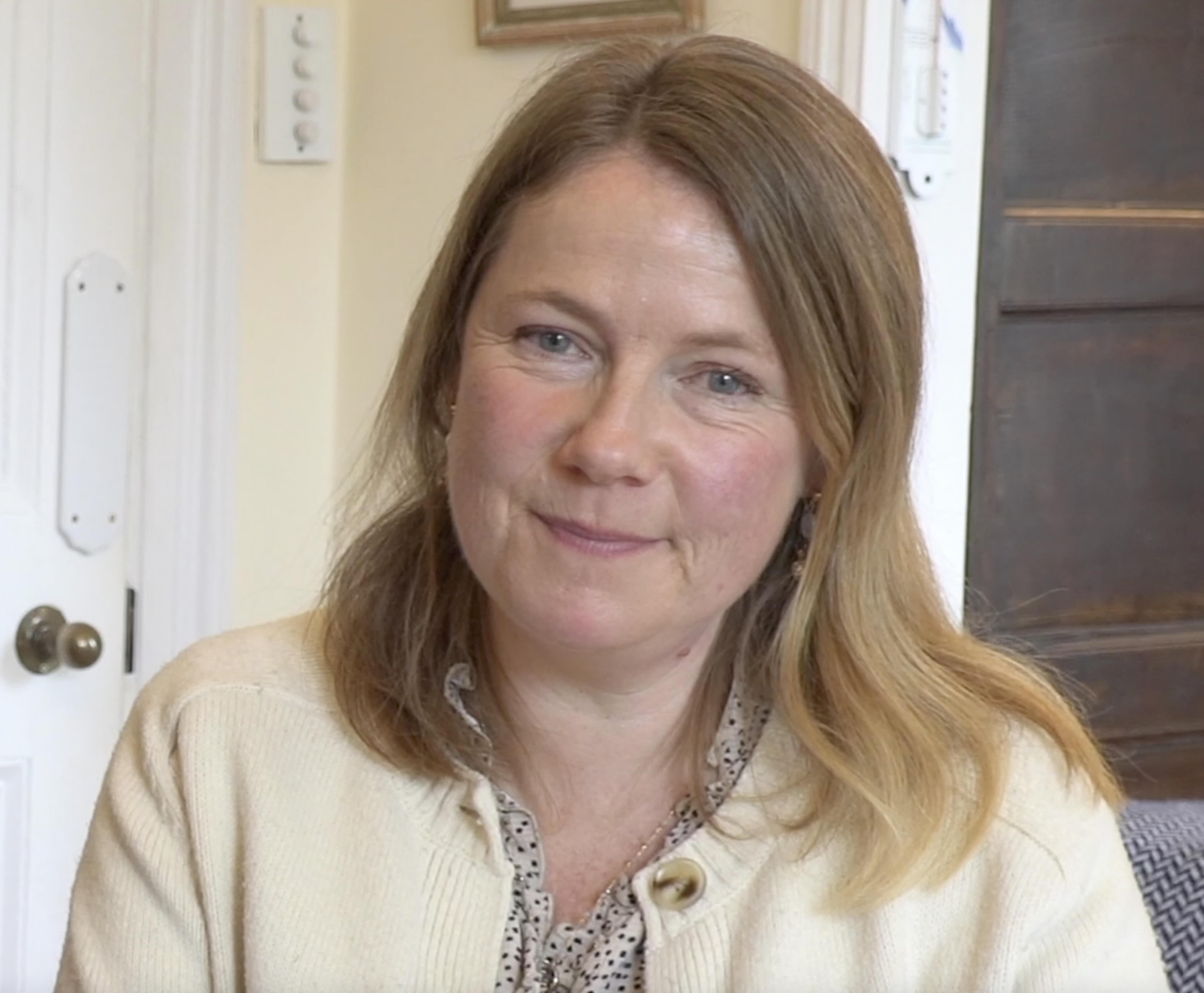
The answers were received from the deputy leader of the council, Justine Rutland, (pictured below).
Southborough News suggested to Justine Rutland that some councillors may see a loss on this particular part of its RVP investment as “simply unavoidable” as it could be seen as “necessary spending to maintain the existing income of around £ 4.5 million pa from the centre”.
Justine Rutland said she was “mystified” by this Southborough News suggestion and Justine Rutland said: “I see no foundation for it (the statement) and thought I should say so.”
The council bought the whole RVP shopping centre from its leaseholder, British Land, for £9 million in 2023. The RVP was built in 1992 and the council already owned the freehold on the land.
Question 1:
Many residents still do not understand why the loan is being paid back over 50 years, not 20-30 years. In the meeting on 5th October, Jane Fineman, the council’s Head of Finance, Procurement and Parking stated that the council was legally entitled to borrow on whatever basis that it decided. She said (after 25 mins) “the auditors are comfortable with this.” Jane Fineman also said: “For this particular project, a lot of it is structural, and therefore, we would expect for it to be useful for 30 to 50 years.” That answer seemed to accept that many of the toilet fixtures and internal refit would not last anything like 50 years.
A key advantage of borrowing for 50 years is clearly is that the annual borrowing bill is smaller than the annual bill if a 30 year loan period is used. But the disadvantage is that residents in 40 years would still be paying for a refit they no longer have the benefit of, as the fixtures will have had to be replaced again by then. So could you please explain clearly why it is prudent, not just legally possible, to borrow for this project over 50 years?
Council Answer:
The scheme needs to be affordable without placing a strain on existing budgets. Long-term assets are funded through long-term borrowing.
The principal cost is for the building itself, including a new roof that has reached the end of its useful life; and a new ceiling/floor in Palm Court (depending on which level you look at it from) that will create additional space at ground level and new leisure amenities at the lower level. Please rest assured we are not borrowing over 50 years in order to pay for toilets, paint and lightbulbs.
The 50 years is a modelling assumption, not a contract. The council expects to repay the internally borrowed element over a shorter period where that makes sense, and the projected borrowing is flexible. The funding strategy is at paragraphs 8.2 to 8.5 of the Cabinet report of 22 October.
The business case is for the scheme to finance the loan from its own income. Residents in 40 years won’t be paying for this through council tax, because the plan is that they won’t be paying for it at all. If you report the 50-year period, please report the funding source in the same sentence.
Question 2:
In the meeting, one answer stated that the new area brought back into rental use by the Palm Court project is only a “very modest increase” in area of 18,000 square feet in the basement. The total area of RVP currently in use is (93% of 388,000 square feet or) 360,800 square feet. So we are talking about an increase in lettable area of only around 5% (18/360.8). Did I understand this correctly?
Council Answer:
Yes, the 18,000 sq ft figure is correct This is the space in the former food court that will be given over to leisure. The 5% conclusion does not follow from it, because the sum compares two different things.
The former food court in Palm Court is currently unlettable and therefore does not bring in any income. Its condition and layout mean it cannot meet the requirements of the tenants the council is targeting without investment. The 18,000 sq ft is the net new or reconfigured lettable space the works create.
The 93% occupancy figure you use is the council’s published figure of 94% for the units that are lettable in their current state (council website, Royal Victoria Place: Investing in the Future, April 2026). It is a measure of how well the trading part of the centre is doing. It is not a measure of how much of the building is capable of being let, which is what your calculation needs.
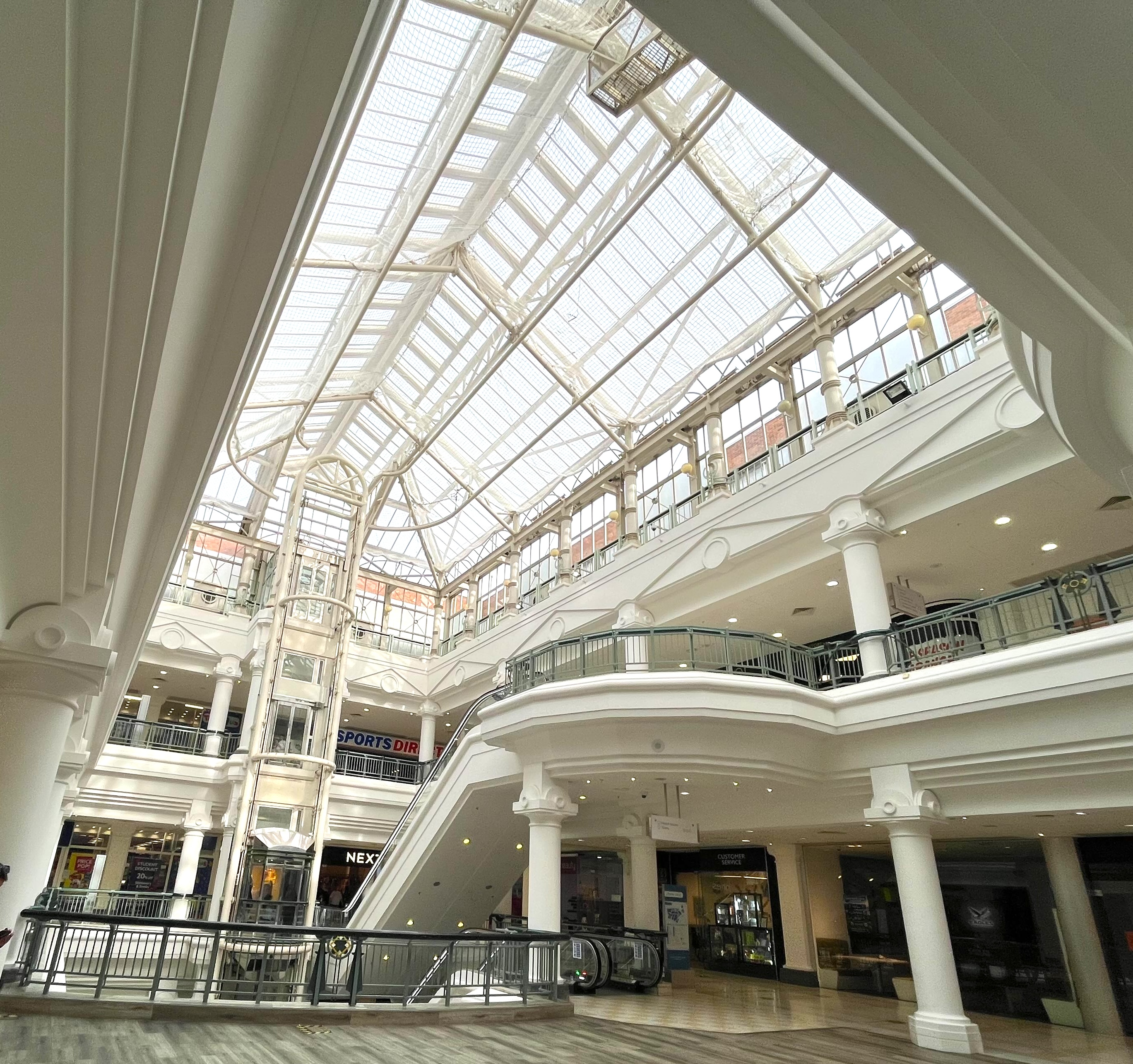
Picture of Palm Court’s existing roof and first and second floor below:
Question 3:
From studying the council’s accounts, the RVP brings in revenue of around £ 4.5 million a year currently. The council is forecasting a direct £ 1.1 million boost to the rental income of the RVP as a result of the Palm Court project adding to rentable space. This represents a 24% boost to revenue of the centre (sum is 1.1/4.5). So how can a 5% area boost possibly generate a 24% revenue boost? (1 know that a lot of my figures are extrapolations and not confirmed data, but even so, this is a huge discrepancy.)
Council Answer:
The new floor area contributes to the revenue boost, but there’s more to it than that. The increase arises from:
1 – new net operating income from the level that comes back into use (Question 2)
2 – new tenants taking units that are currently empty because the investment has made RVP a centre they want to be in
3 – rental uplifts made possible because of the higher quality of the shopping centre
4 – new retailers paying higher rents than the current occupiers of the space they take once the improvements are done.
Rent in a shopping centre is variable, not a fixed rate per square foot applied to whichever occupier is there. It depends on an array of factors, including the length of the lease. Each unit is unique, with different locations, neighbours and conditions. A refurbished Palm Court with leisure below and improved mall space above is a much more attractive proposition from the one that exists today, and rents will reflect that. In this way, sensible investment underpinned by a sound business case pays for itself.
The £4.5 million divided by the floor area only gives us a blunt average.
Question 4:
The annual average rent per square foot of the centre is currently apparently £ 12.5 per square foot. (This is calculated from £ 4.5 million a year RVP total revenue divided by 360,800 sq feet). But the new area needs to generate £1.1 million / 18,000 square feet or £ 61 per square foot. Can you explain how the new basement leisure activities will be able to afford such a high rent as £ 61 per square foot?
Council Answer:
Unfortunately, your arithmetic here rests on a false premise. If you take the £1.1 million, divided it by the 18,000 sq ft of basement space alone, you conclude we need £61 per square foot.
That assumes every other unit in Palm Court stays frozen at its current rent and the whole of the new income has to be squeezed out of the basement operators. That isn’t how commercial leasing works (see Q3). When you take a failing atrium level and turn it into a leisure destination, the rental value of the units around it moves too. We won’t be asking basement tenants for £61 a square foot; once the uplift on relet and reconfigured units elsewhere in Palm Court is counted, the rent needed from the leisure space is a fraction of your figure and in line with what leisure operators pay elsewhere.
Please don’t print £61 per square foot as the council’s number, because it isn’t. It’s the output of a calculation whose premise is incorrect.
Council’s new plan for basement area shown below:
Question 5:
Is any of the discrepancy (in the high expected increased revenue) taken up by your hopes to rent out new areas on the first and second floor which currently appear to be full, but which actually are not paying any rent?
Council Answer:
The claim that occupiers on the first or second floor are “not paying any rent” is not an accurate description of the position. The project delivers a revised tenant line-up in Palm Court, securing new tenants paying higher rents than the current occupiers of that space.
Individual tenants’ rents and lease terms are commercially confidential, both to the tenant and to the council. This is exempt information under paragraph 3 of Schedule 12A to the Local Government Act 1972 (information relating to the financial or business affairs of any particular person), and it is the same category of information that no private landlord would ever publish.
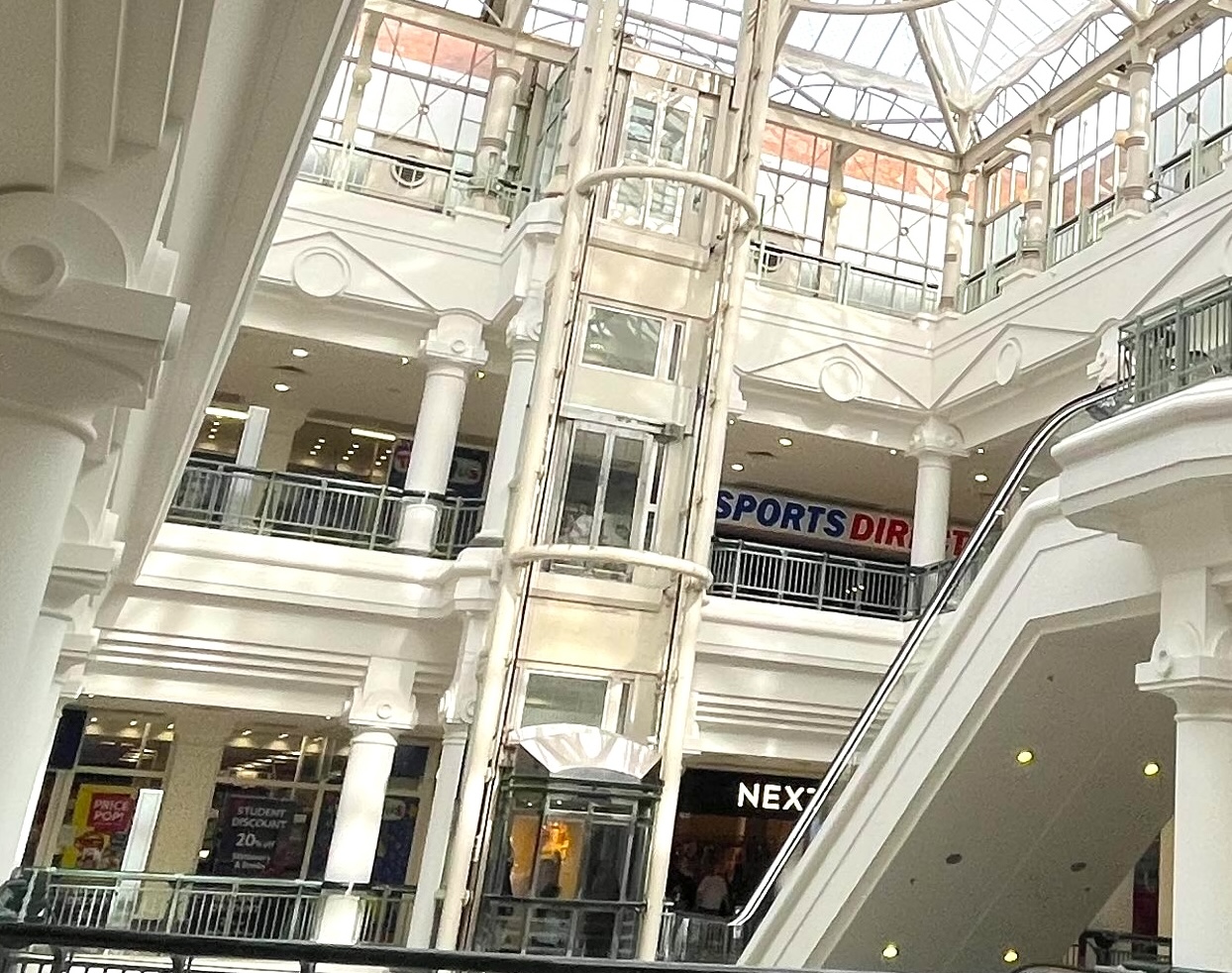
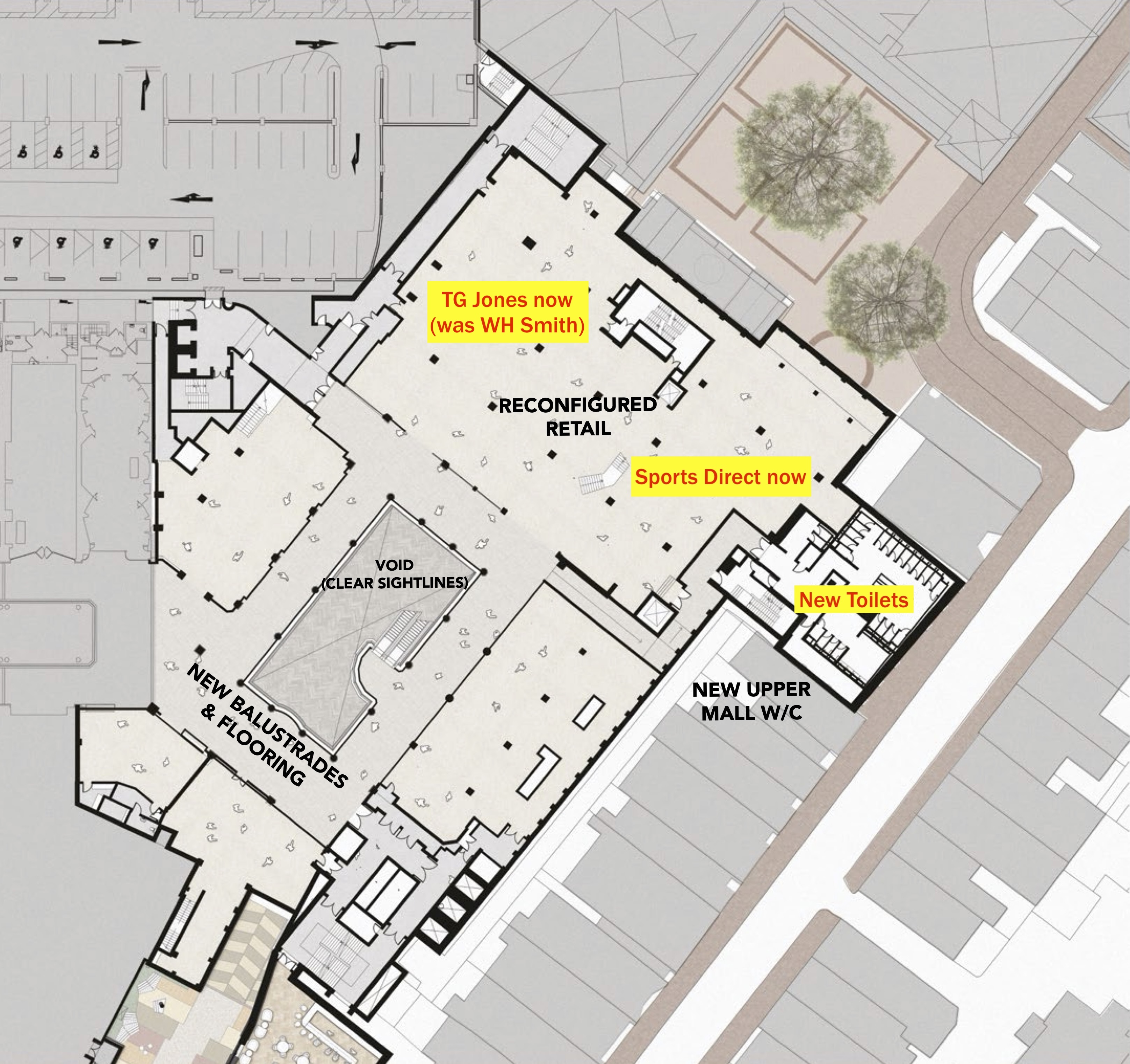
Picture below of current centre with Sports Direct, Next and the two floors of TG Jones (formerly WH Smith) to the left.
Question 6:
One key part of the Palm Court project is to create a new larger retail unit on the first floor from combining the first floor part of TG Jones (formerly WH Smith) with the existing Sports Direct unit. Can you reassure residents that the first floor section of TG Jones, which provides art equipment, education, travel and other books and games will be offered a suitable alternative space. Books are valued by many residents and they would not want TG Jones forced to downsize in the centre if it would otherwise have maintained its existing floorspace.
Council Answer:
I appreciate that many residents love books and that TG Jones is a valued tenant. It is also a business that has gone through a period of change, and confidential discussions are ongoing regarding its future space requirements.
Revised look of the first floor of the Palm Court area (top floor) where TG Jones and Sports Direct appear set to leave:
Question 7:
In the meeting, when asked about the £298,000 pa boost predicted in annual Additional Parking Income (from table 8.6 in the Agenda documents), it was stated by Jane Fineman (at 1’08”) that “that was just an assumption of inflationary increases on parking charges. At the moment there is no assumed sum in the plan for volume growth”. In other words Jane was saying no increase in visitor numbers has been assumed. Is this really correct?
I’m not clear why general inflation increases in parking revenue should be included as a boost for the project, as RVP parking income is core council income (rising with inflation) just as costs (eg council payroll/contracts) also rise in line with inflation. This £ 298,000 is a big part of the £ 1.8 million extra total income increase predicted from the project loan. So can you please clarify how the £ 298,000 pa extra income from parking is calculated.
Council Answer:
The £298,000 is based on the parking charges in the (newly refurbished) RVP car park rising by 4% a year for the four years following completion of the project ie after 2029. No growth in the number of cars using the car park is assumed.
Naturally, I expect visitor numbers to increase, but it hasn’t been assumed for the business case.
New roof design planned for the RVP shown below:
Question 8:
Maybe the separate parts of the Palm Court project should be looked at individually. The new roof seems essential as it was stated the existing roof is “beyond its useful life.” Industry experts tell me that the likely cost of the new roof planned is around £ 5 million and the refits to the toilets (and the merger of the upper TG Jones and JD Sports units planned for the first floor) would cost a further £ 1 million.
Therefore it seems the cost of separating off the basement by adding a complete roof to the basement and so reducing the atrium to just the first and second floor is coming at a huge cost of around £17 million. For around £ 2 million, a refit of the basement could bring back into use 80% of the empty space there. So why is £ 17 million being spent on adjusting the atrium when all that will be created is 3,000 sq feet of new space and creating an enclosed space devoid of natural light – which actually is likely to be less pleasant to be in (and possibly rent out) than the current open basement at the bottom of the atrium?
Council Answer:
The assessment of costs on those two elements (roof and WCs) is broadly correct. There are other costs to be considered, such as shop unit refurbishment and strip out/demolition, reconfiguration, refurbishment of the mall (within Palm Court), site set-up, contractor costs, utilities costs (substation), professional fees, vacant possession costs, and leasing costs, including capital contributions and contingency.
The council’s feasibility study, by consultants appointed through open tender in 2024 and reported to Cabinet in July 2025, found Ely Court and Palm Court underperforming, parts of the eastern end left in a poor and largely unusable condition when the earlier scheme was abandoned, and key areas including Palm Court running at a negative net operating income (Communities, Housing and Environment Cabinet Advisory Board minutes, 8 July 2025; rvpfuture.com FAQs). The ‘do nothing’ option in that study came with its own maintenance bill, and the council’s published FAQs say the same: significant maintenance and replacement costs fall due in Ely Court and Palm Court whether or not anything else happens.
Regarding daylight, the leisure uses we are targeting for the lower level mostly don’t want daylight and are designed around not having it. Enclosing the lower level is what makes it usable by those operators. Planning permission for the replacement roof and a lawful development certificate for infilling the lower mall void were both granted by the Planning Committee on 24 June 2026; the drawings are on the planning register under 26/01029/FULL and 26/01012/LAWPRO.
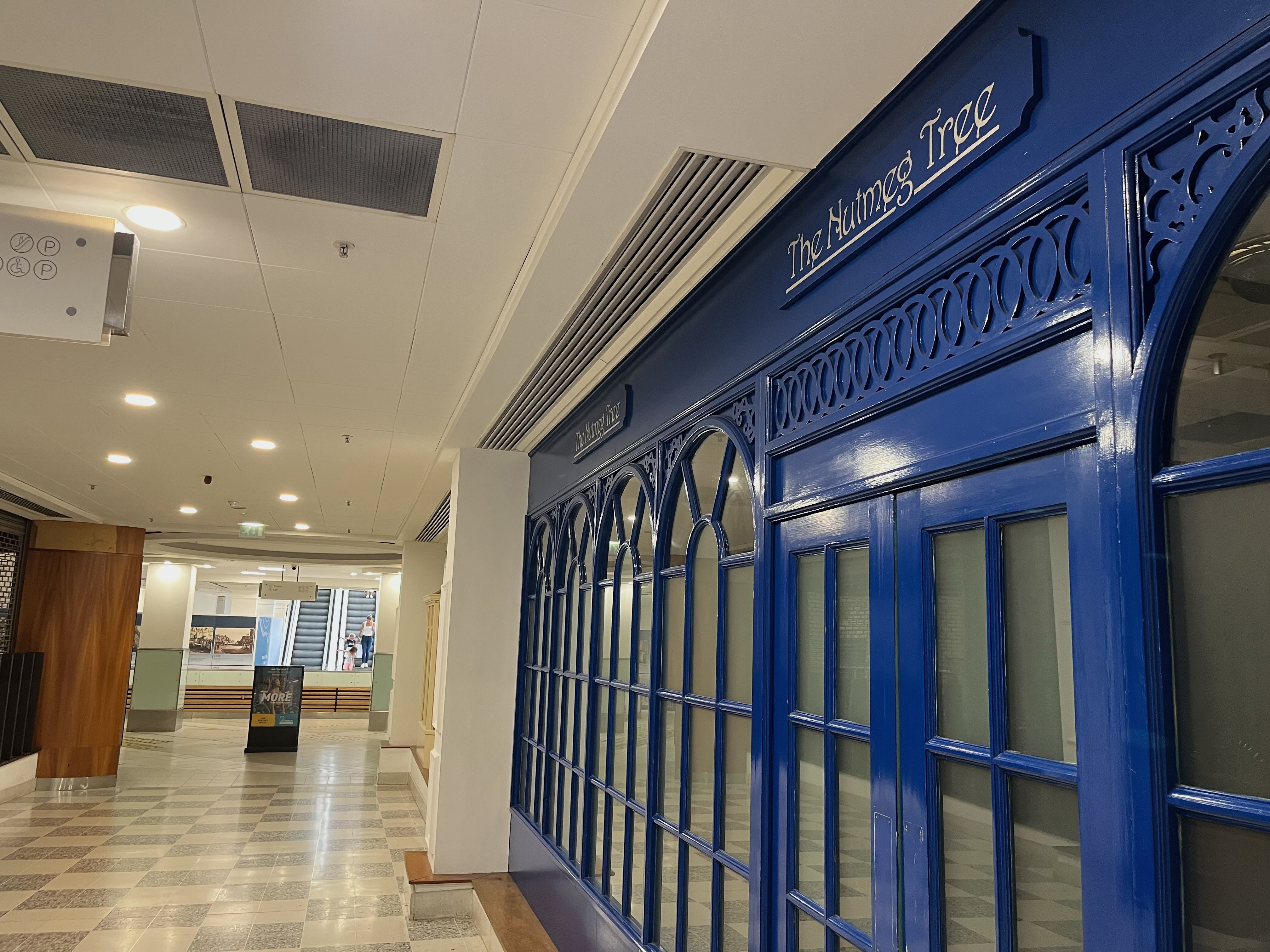
Current view of basement of Palm Court area:
Question 9:
If the critics I have spoken to are proved correct, then:
- the extra RVP rental income to be expected is more like £ 500,000 pa, not £ 1.1 million pa
- the extra car parking income included as a benefit of £ 300,000 pa is not due to the project
- the loan should be taken out over 30 years, not 50 at 6.5% not 6.0%
This would mean the annual loan repayments would be £1.8 million (not £1.5 million) and the revenue would be £ 0.9 mn not £ 1.8 mn. This creates a £ 0.9 million annual extra net cost to the council. How can you be sure a £ 0.9 million pa LOSS is not a possible outcome of the project?
Council Answer:
The income projections were built up by specialist consultants in shopping-centre leasing, restaurant and leisure leasing, cinema leasing and economic impact, appointed by open tender. They were not produced by officers or councillors with a figure in mind. The feasibility report that went to Cabinet in July 2025 included a sensitivity analysis in its exempt (confidential) appendix, which tests the business case against lower income and higher costs (Cabinet Advisory Board minutes, 8 July 2025).
In answer to your three assertions:
– The £500,000 rental figure is attributed to unnamed critics; the council’s £1.1 million is attributed to named consultants whose work has been through Cabinet, the Cabinet Advisory Boards and the Investment Advisory Panel.
– The parking point is dealt with in Q7.
– The 30-year term is yours, not the council’s, and I have explained in Q1 why a term matched to the asset’s life is the prudent one. The council has also been clear it can use internal borrowing for part of the cost and repay it faster where sensible, which is exactly the flexibility a forecast such as yours does not factor in.
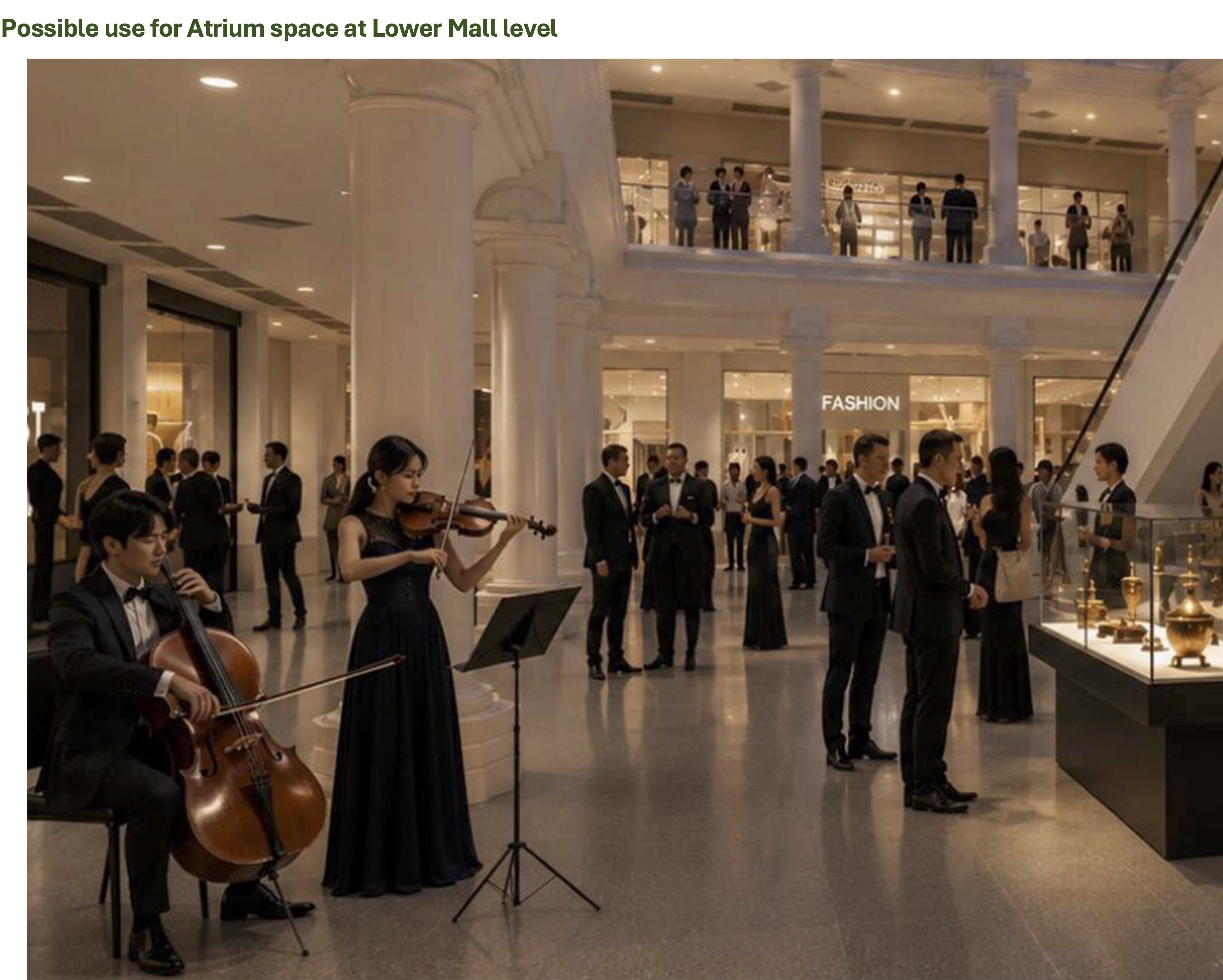
Council illustration of how filled in floor above basement would look:
Question 10:
It is certainly possible to view the £ 27 million Palm Court project as necessary to maintain the current relevance and overall footfall of RVP and so secure the existing £ 4.5 million pa revenue of the centre. So councillors may see a loss on this particular part of the RVP investment as simply unavoidable.
If £ 0.9 million of extra revenue from Palm Court is a better mid-case estimate, it would still mean that the council is getting a £ 5.4 million annual return from its total investments in RVP so far (initial purchase, car park improvements and Palm Court) of around £ 50 million). This is a 10% return and so that makes the purchase of RVP still potentially a defensible investment. However, this scenario still means that the council’s overall accounts will not be as strong in the future as currently forecast. So what options are there to make savings in other council services (or maybe reduce the council’s debt servicing costs by sales of non-performing assets) to ensure council tax does not increase?
Council Answer:
Savings and efficiencies are considered every year as part of the budget-setting process, with the papers published and the decisions taken at Full Council.
As previously stated, the Palm Court business case is for the scheme to finance its own borrowing from its own income. There is no line in the council’s medium-term financial plan that says “council tax rise to fund RVP”, because the project is not designed to be funded that way.
Your £50 million total and your 10% return are your own constructions, and they fold together the lease purchase, the car park and Palm Court as though they were one decision. If you want to test the Palm Court decision, please test it on its own numbers, which are in the Cabinet papers.


A very comprehensive report.
Parking costs are already high, and I come to T/Wells less frequently than I did before. I live in Crowborough.
Parking needs to be affordable to attract people. The original free Sunday parking should be reintroduced.
If parking continues to rise, visits will be less frequent, and the town will attract fewer visitors to RVP – not more.
NP
LikeLike